
South Sudan’s Parliament Officially Adopts Resolution Supporting DPCW
Advancing the Institutionalization of Peace Through the Executive, Judicial, and Legislative Branches of Government
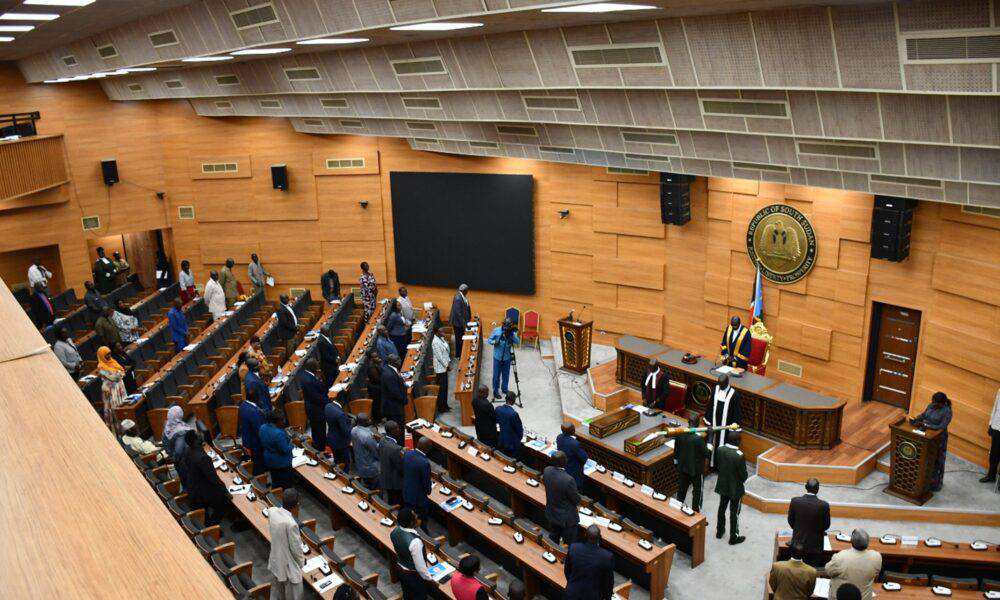
On September 15 of last year, South Sudan’s Transitional National Legislative Assembly (TNLA) officially adopted Resolution No. 29/2025 in support of the Declaration of Peace and Cessation of War (DPCW) during a plenary session held in Juba, the nation’s capital.
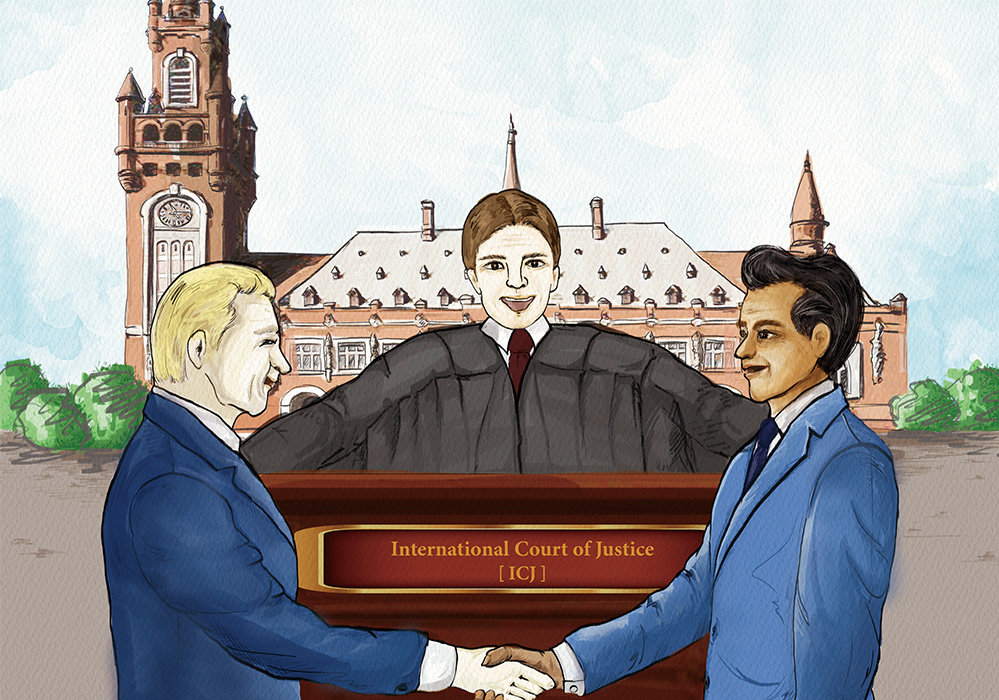
The adoption of this resolution marks the culmination of a decade-long journey that began with initial engagements with judicial leadership in South Sudan and was continued through President Salva Kiir Mayardit’s official endorsement of the DPCW in 2024. The DPCW was ultimately completed through the commitment of the legislative branch. As a result, South Sudan has become a notable example of a nation in which all three branches of government—executive, judiciary, and legislature—have embraced the DPCW as an official framework for establishing lasting peace. This achievement carries particular significance as it represents a legal foundation for national unity and a meaningful effort to break the cycle of civil conflict that has persisted since the country gained independence in 2011.
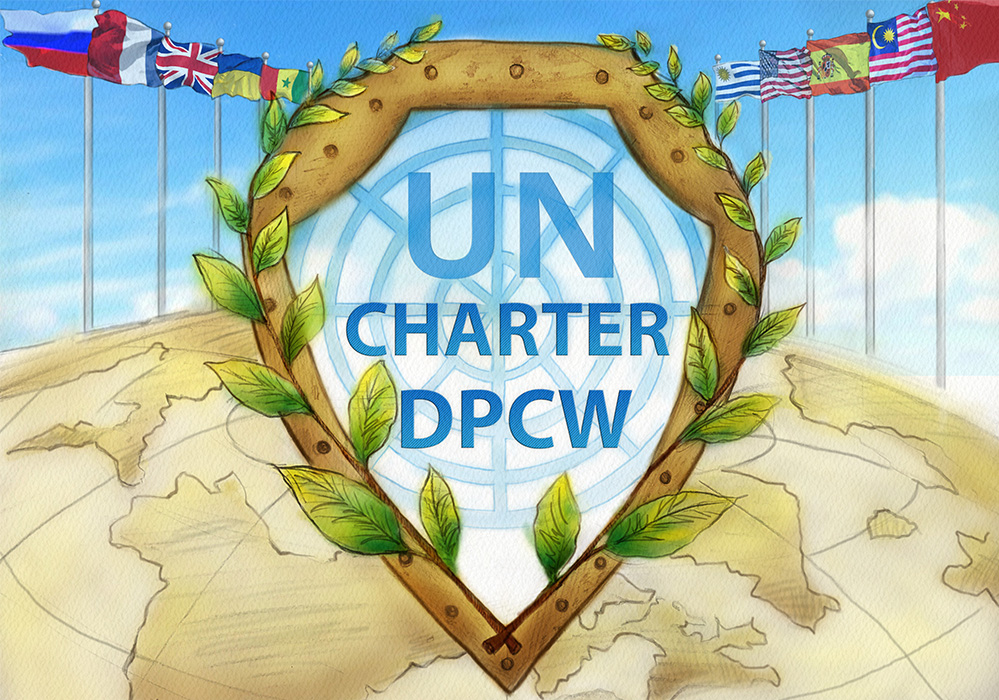
Reflecting the values embodied in the DPCW’s 10 Articles and 38 Clauses, the key provisions of the resolution include:
- International Recognition of the DPCW: Recognizing the DPCW as an international declaration aimed at the cessation of war and the achievement of world peace, while supporting the adoption of the DPCW as a United Nations General Assembly resolution.
- Peace-focused Reallocation of Resources: Recommending that military resources and public funds be prioritized for peaceful purposes and sustainable development, including human rights, education, and healthcare.
- Promotion of a Culture of Peace: Systematically integrating peace and human rights education into public education and public policy, while institutionalizing peacebuilding programs involving youth and citizens, such as the Youth Empowerment Peace Workshop (YEPW) and the Youth Engagement and Peace Class (YEPC).
At the center of the resolution’s adoption were two South Sudanese leaders who transformed the pain of war into a driving force for peace: Former Speaker of Parliament Jemma Nunu Kumba and Hon. Bona Deng Lawrence, Chairperson of the Standing Committee on Peace and Reconciliation.
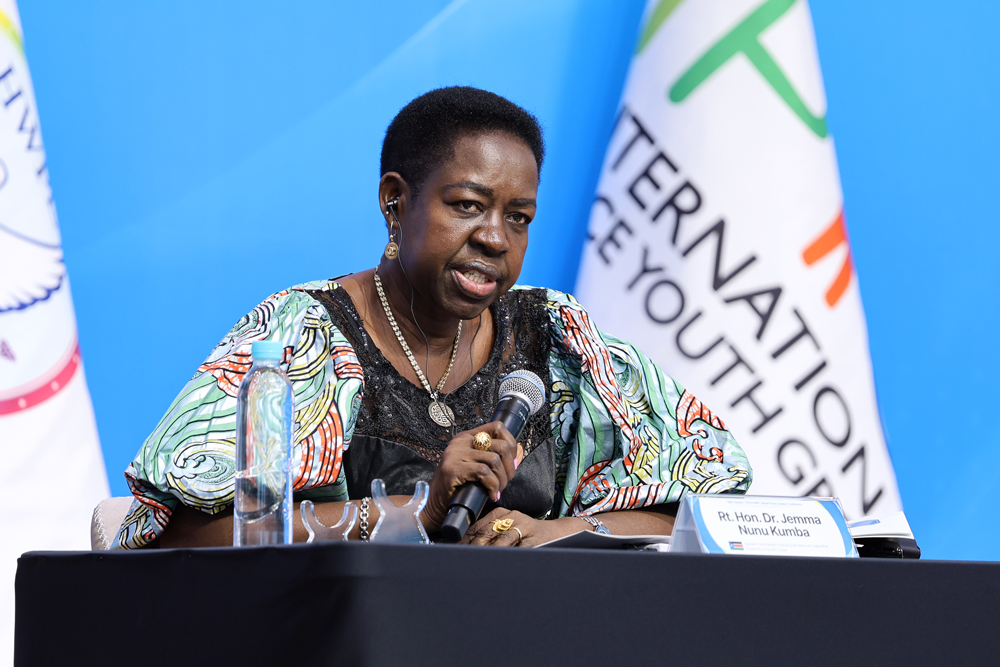
Hon. Jemma Nunu Kumba, Former Speaker of the South Sudanese Parliament on Strengthening Her Commitment to Peace Through her Experience as a Refugee
For Jemma Nunu Kumba, the first female Speaker of the National Legislative Assembly of South Sudan, peace is a value directly connected to survival. When civil war broke out in 1991, Former Speaker Kumba joined the hundreds of thousands who crossed the border and lived as refugees. During those years, there was only one thing she longed for—to return to her homeland and live together with her people.
“Life in exile is never a good experience. Leaving your country is like losing a part of your soul. I simply wanted to live in my homeland together with my people.”
After returning to South Sudan and becoming Speaker of Parliament, Kumba had a clear reason for taking an interest in HWPL and the DPCW. After witnessing numerous peace agreements collapse, she saw the DPCW as a “solution for achieving lasting peace.” She became convinced that although the DPCW is not an international treaty, it serves as one of the most practical milestones through which countries can voluntarily develop laws and policies. Based on this conviction, she supported the legislative process surrounding the DPCW.
“The war has displaced a vast number of people who now urgently need resettlement. Furthermore, the ongoing conflict in a neighboring country has adversely affected the economy of the Republic of South Sudan, creating additional obstacles to the implementation of the peace agreement. Government resources alone are insufficient to sustain its implementation. Government resources alone are insufficient to sustain its implementation. Now the DPCW is an important tool for us, which can be used to complement the efforts of the government.”
— From an interview conducted during the 11th Anniversary Commemoration of the HWPL September 18 World Peace Summit
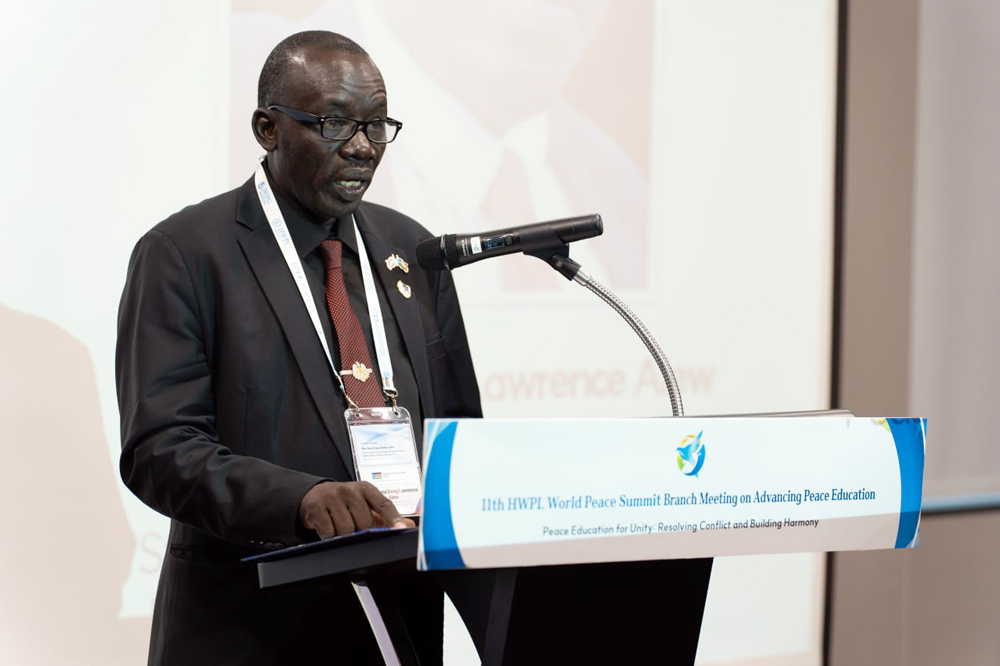
Hon. Bona Deng Lawrence, Chairperson of Standing Committee on Peace and Reconciliation, Carries Forward His Father’s Legacy of Peace
For Chairperson Bona Deng Lawrence, who leads the Standing Committee on Peace and Reconciliation, peace was a mission inherited from his father. In 1972, his father served as a member of the negotiating team for the Addis Ababa Agreement. During a deadly attack in which all of his colleagues were killed, he was the sole survivor. Thereafter, he devoted himself to peacebuilding efforts in South Sudan, which greatly influenced Lawrence as well.
Last year, he attended the HWPL 11th Anniversary Commemoration of the September 18th World Peace Summit. When asked in an interview what led him to dedicate himself to peace activities, he responded as follows:
“Part of the question you are asking is partly about the history of my country. It goes back to 1956 when we gained our independence from the British. Since then, our country has never truly been at peace. Throughout our history, we have known nothing but a continuous cycle of conflict and war, punctuated only by agreements that ultimately failed.”
“The entire history of my country has been defined by war, conflict, and suffering. Having never experienced the goodness and sweetness of peace, we now yearn for peace and are committed to advancing its cause. We have had more than enough of war. It has brought us no benefit, only devastation for generations; it has brought us no benefit, but has instead devastated our generations. It is high time we pursued peace.”
When he introduced the resolution to the plenary session, some fellow lawmakers expressed reservations. During the discussions, questions were raised such as, “Does this declaration carry binding force under international law?” and “Is it legally appropriate for our parliament to adopt it voluntarily?” However, Chairperson Lawrence had the provisions of the DPCW thoroughly reviewed by the Ministry of Foreign Affairs and the Ministry of Justice. After securing official letters stating that there were no objections to the introduction of the resolution, he persistently persuaded fellow lawmakers. As a result, Members of Parliament agreed that the DPCW could contribute to peacebuilding and social integration in South Sudan, and the resolution was passed.
“In South Sudan, the DPCW embodies deeply significant values. A closer look at its 10 articles and 38 clauses reveals that human rights lie at the very core of the document. These provisions focus entirely on fostering the positive values needed both for our nation and the international community.”
The Beginning of Change Through Action
The adoption of the resolution was regarded not as the completion of a legal procedure, but as the starting point of change across South Sudanese society. Chairperson Lawrence described what the resolution meant to the people as follows:
“The adoption of the DPCW holds profound significance for our nation. Although we are currently pursuing the peace process, we face numerous challenges and obstacles along the way. In this context, the adoption of the DPCW provided immense reassurance to citizens who felt that the implementation of the 2018 peace agreement had stagnated.”
“When Parliament demonstrated its commitment to peace by adopting the DPCW as a national resolution, it brought profound relief to the public, who welcomed the decision with great joy. This reaction clearly demonstrated the people’s deep-seated love for peace and their earnest yearning for its realization.”
Former Speaker of Parliament Jemma Nunu Kumba and Bona Deng Lawrence, Chairperson of the Standing Committee on Peace and Reconciliation.
The journey began from different starting points: one shaped by refugee life and the other by a mission inherited from his father. Through their actions, both leaders have demonstrated that peace is not simply given, but must be actively chosen and pursued. The adoption of The DPCW is the fruit of that choice. It signals that South Sudan is moving beyond the memories of war and advancing toward peace.