
HWPL Holds the 2nd International Religious Peace Academy for the Middle East and Africa
Christians, Muslims, and Hindus Gather to Enhance Interfaith Understanding
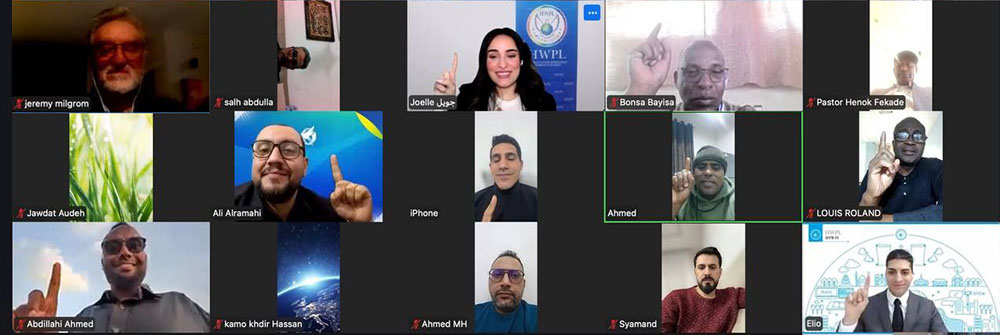
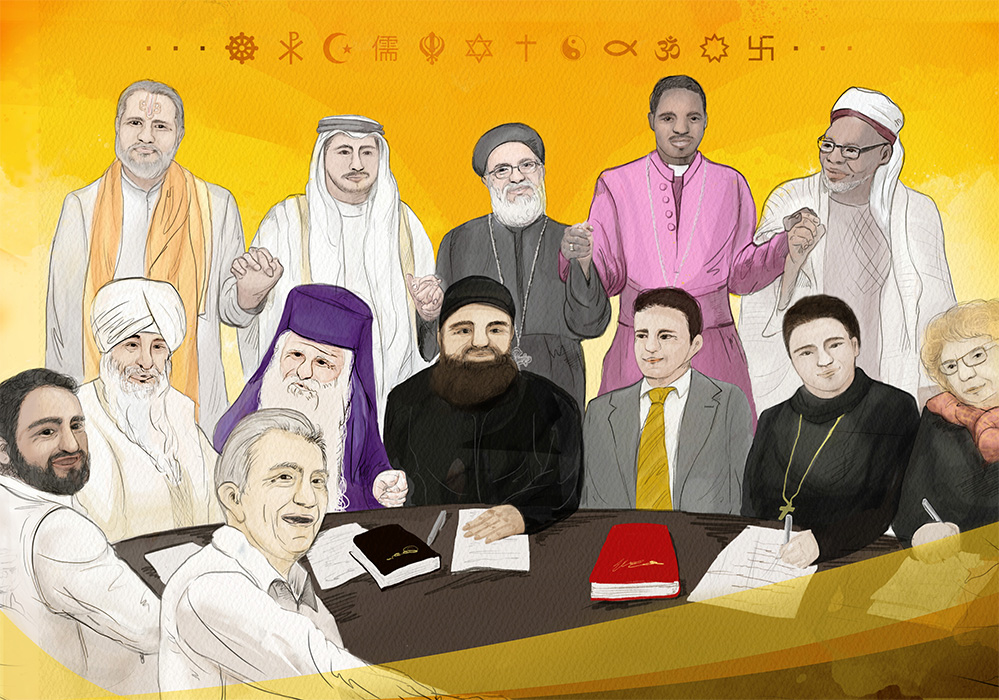
HWPL held the 2nd International Religious Peace Academy (IRPA) online on Friday, January 9. Held under the theme of “Interfaith Understanding: The Path to Harmony,” the event was attended by approximately 40 religious leaders and civil society representatives from Christian, Islamic, and Hindu communities in the Middle East and Northeast Africa.
This event followed the first session held on November 28 of last year. With the goal of building a practical structure for inter-religious dialogue, participants sought common values and possibilities for cooperation beyond religious differences.
In a global context where religion is being used as a justification for war and conflict in many parts of the world, IRPA is an interfaith dialogue and mutual education program designed by HWPL to strengthen the conflict-resolution capacity of religious leaders and civil society. Participants attended lectures on scriptures from various religions, compared the scriptures with one another, and through discussion learned about common values contained in different scriptures as well as practical peace.
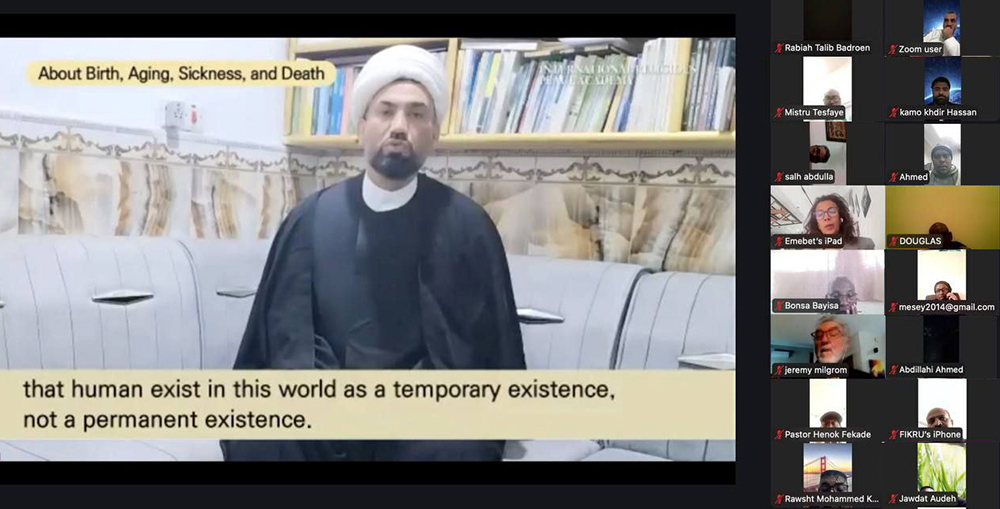
In this session, religious leaders from Christianity, Islam, and Hinduism delivered presentations on the shared theme of “Birth, Aging, Illness, and Death.” Following the presentations, the panelists compared interpretations of life and death from each religion’s perspective and discussed principles of coexistence.
In particular, as the outcomes of the first session were shared with invitees, a greater number of religious leaders participated in this second IRPA. This demonstrated that the network is expanding in line with the objective of “strengthening solidarity through interfaith understanding.”
In the Middle East, religion functions as a factor that legitimizes political and ideological conflicts and intensifies tensions. In East Africa, social tensions continue as changes in the religious landscape intersect with regional conflicts. In this context, the IRPA played a role in enabling religious leaders to engage in direct dialogue, reduce prejudice and misunderstanding, and strengthen the social foundation for coexistence. Participants focused on communicating directly and understanding one another rather than misunderstanding other religions.
Markos Yakob Daka, Director of the Ethiopian Yehiwot Berhan Church, who attended the event, stated, “It is essential for religious leaders to build cooperative structures based on mutual understanding,” and evaluated that this program served as a reference for establishing such cooperation models. In addition, Blessen Kairian, Pastor of Ajman Christian Church in the United Arab Emirates, said, “In complex and conflict-prone environments, a linkage system among religion, politics, and civil society is necessary. IRPA is playing a central role in establishing an actual foundation for cooperation.”
HWPL plans to hold an Inter-religious Peace Prayer Meeting in the first half of this year. In addition, it plans to jointly establish annual education plans with regional religious leaders and regularly host forums that study cases of interfaith conflict in order to enhance interfaith understanding.