
HWPL hosts international peace education webinar,
“Beyond the Desk: Shaping the Future Generation”
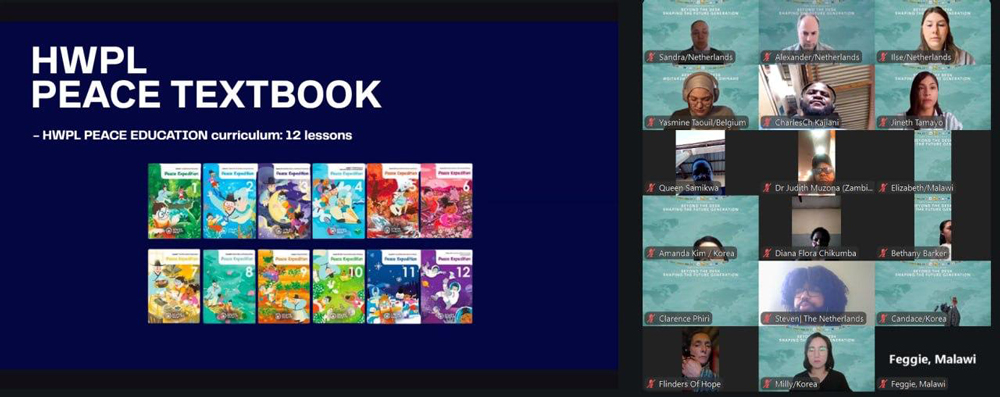
On March 28, HWPL hosted an international peace education webinar under the theme “Beyond the Desk: Shaping the Future Generation.”
The webinar brought together about 100 participants from various regions around the world, including Africa, Europe, and the Caribbean. The event served as a multinational platform for dialogue, where participants shared challenges faced in the field of education and explored ways to address them based on the universal values of peace. In particular, the participation of youth leaders, education professionals, public institution officials, civil society representatives, and students showed a strong interest in peace education.
Representatives from seven countries presented the current state of education in their respective countries. They held in-depth discussions on common challenges faced worldwide, including school violence, conflicts in digital environments, and deepening social inequality.
First, Feggie Mphasi Mwale, Chief Education Officer of the Southwestern Education Division in Malawi, delivered a presentation on “Creating a learning environment that protects, empowers, supports, and inspires teachers and learners.” He emphasized the importance of consistently practicing peace education, saying, “When the message of peace is continuously delivered, students can internalize the value of peace.”
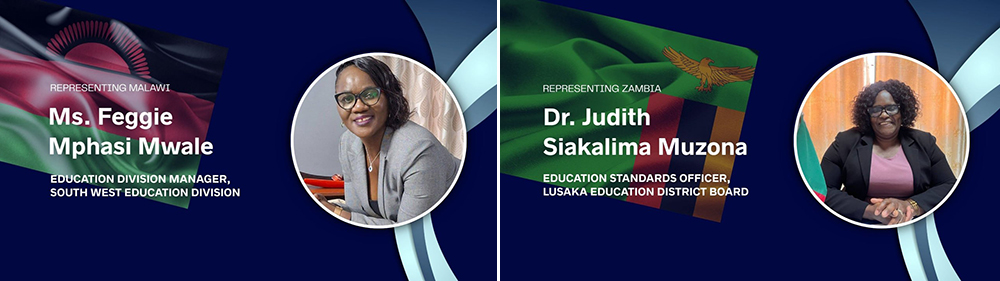
Dr. Judith Siakalima Muzona, Education Standards Officer at the Lusaka District Education Board in Zambia, pointed out that “social media and drug abuse are undermining peace within schools.” She stressed the need to introduce peace education so that students can develop empathy and conflict-resolution skills.
The participation of educators from Europe, including Belgium and the Netherlands, as well as Stephanie G.D. Croes, an advisor to the Ministry of Education of Aruba, showed that international consensus is growing on the importance and practical need for peace education.
The event also introduced HWPL’s peace education model, which helps students practice values such as respect, consideration, and coexistence in everyday life. In particular, through a demonstration of Lesson 6 of the peace education textbook on the theme of “consideration,” the session showed in detail how the curriculum can be effectively applied in educational settings.
During the webinar, participants identified common challenges faced by countries worldwide. They also agreed that, in a world where the effects of conflict and war continue to be felt, the values of understanding, tolerance, and unity must be intentionally taught to future generations. In addition, they reaffirmed the need to strengthen international networks among education professionals and to provide education based on the universal values of peace in order to address the challenges facing modern society.
To help educators apply peace education in practice, HWPL successfully completed its peace teacher training program from April to May and continues to lead efforts to expand peace education.