
[Ukraine Special Feature 2] Teaching Peace During War: Stories of HWPL Peace Education Teachers in Ukraine
The full-scale war in Ukraine has been ongoing for over four years, profoundly affecting the lives of millions every day and presenting new challenges to the education system. In Ukraine today, education goes beyond simple learning; it is deeply connected to support, resilience, and the formation of values, making it even more significant.
Amid these circumstances, the HWPL 3rd Peace Educator Training Program in Ukraine was conducted in Ukraine from December 5, 2025 to March 10, 2026. A total of 237 educators successfully completed the program and obtained certification as HWPL Peace Education teachers.
This program was operated in collaboration with regional and municipal departments of education, primary and secondary educational institutions, as well as educational and civic organizations. Conducted online, the training brought educators together as one despite the difficult circumstances of war. Over the three-month period, participating teachers not only learned the theoretical foundations of peace education, but also acquired practical tools that can be applied with students of various age groups.
In the second feature of the HWPL newsletter, stories from teachers who completed this training are shared, along with examples of how they have practically applied peace education programs in their respective educational institutions.
In Dnipro, Muratova Oleksandra, vice principal of Dnipro Primary and Secondary School No. 140 under the Dnipro City Council, is conducting peace education for students across various classes together with fellow teachers who completed the HWPL Peace Education Teacher Training.
In the Sumy region, Vlasova Olena, a librarian at Konotop Higher Vocational School, a national vocational high school, is providing peace education to college students, helping them find inner peace and a sense of connection even during the war.
In the Kharkiv region, Holtviannichenko Oksana, a teacher at Artilske Primary, Secondary, and High School under the Lozova City Council of Kharkiv Oblast, is teaching children online in areas close to the front lines.
What brings together individuals from different cities, diverse educational institutions, and varied professional backgrounds is their shared commitment to teaching peace to young people, even amid the realities of war.
Education During War: Challenges and Adaptation
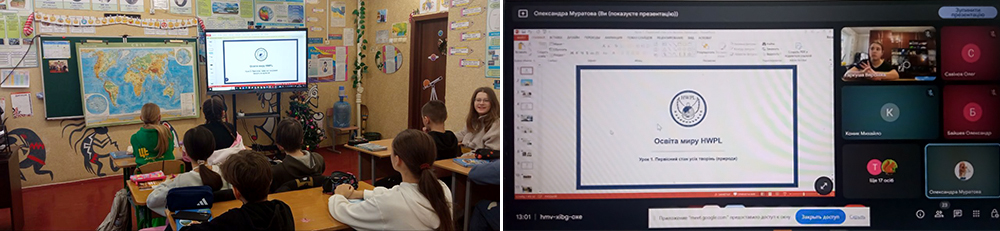
“In a full-scale war situation, the educational process in Ukraine requires constant adaptation,” explained Muratova Oleksandra, a teacher at Dnipro Primary and Secondary School No. 140. “Most classes are conducted online, while some are held offline. Teachers and students continuously face new challenges, yet they strive to maintain stability, support, and the quality of education.”
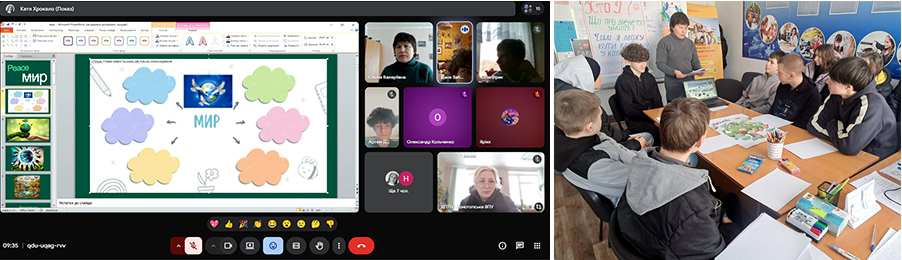
Teacher Vlasova Olena shared a similar situation: “At Konotop Higher Vocational School, classes were conducted remotely for a long time due to security concerns and power outages. Currently, the system is gradually transitioning to a hybrid format. Students take theoretical lessons online, while practical training is carried out on-site.”
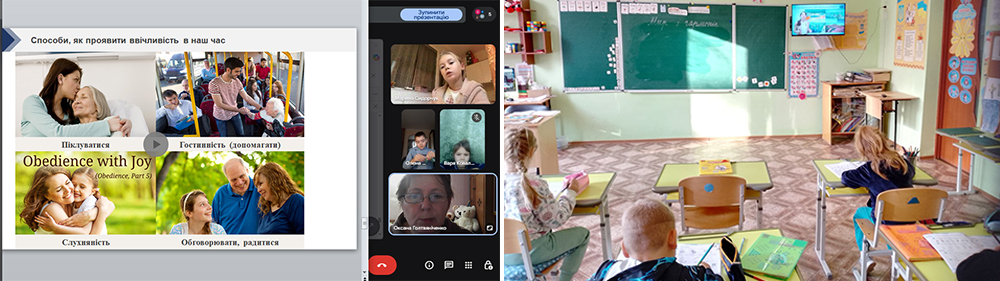
Teacher Holtviannichenko Oksana described the situation at Artilske Primary, Secondary, and High School as follows:
“From the very first day of the full-scale invasion, our school has operated through remote learning, as our region is located close to the front lines.”
Despite these challenges, she has made efforts not to miss opportunities to meet her students in person. “Although the situation is difficult due to the war, I try to meet the children whenever possible so they can experience the joy of communicating directly with their peers.”
Reasons Ukrainian Teachers Participated in Peace Education Training
Although the educators who took part in the training came from diverse backgrounds and experiences, they shared a common goal: to better support children and youth during difficult times, and to help them learn how to live through war without losing their sense of humanity.
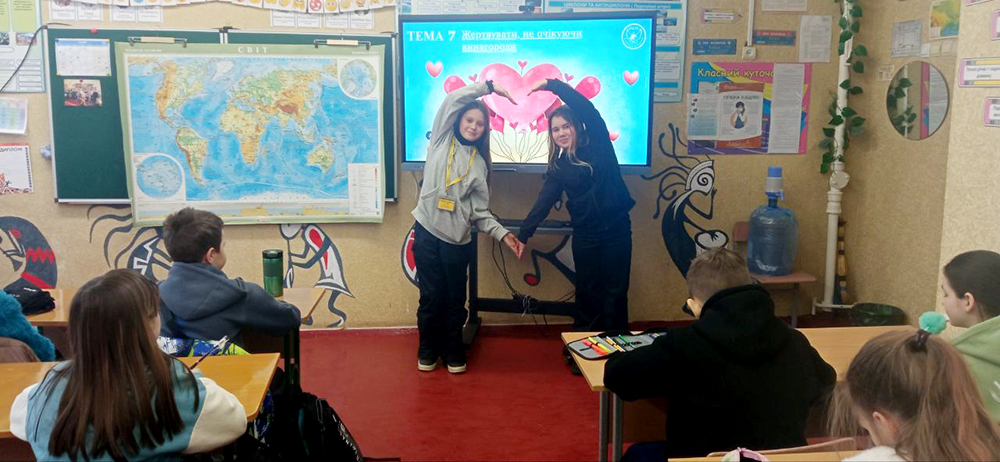
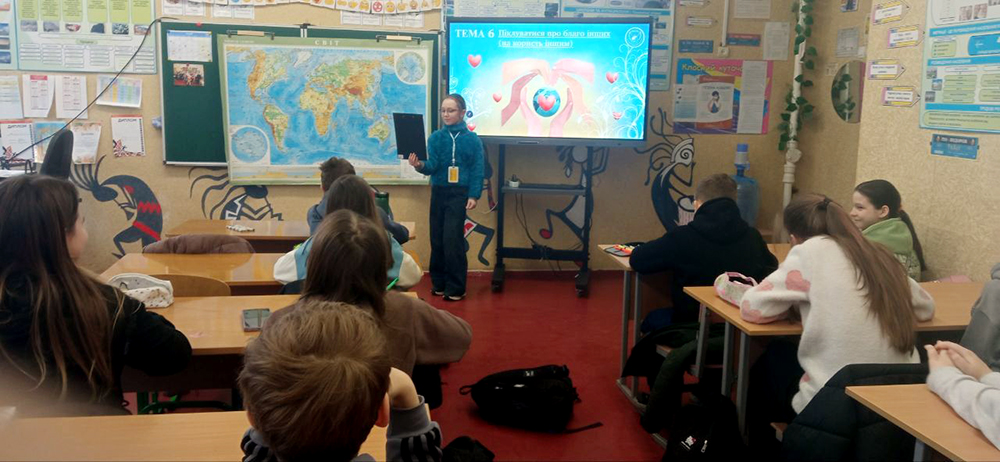
Vice Principal Oleksandra stated: “I wanted to gain a deeper understanding of how to foster a culture of peace among students in a wartime situation. It was also important to equip myself with practical tools to address the emotions, experiences, and concerns of the children.”
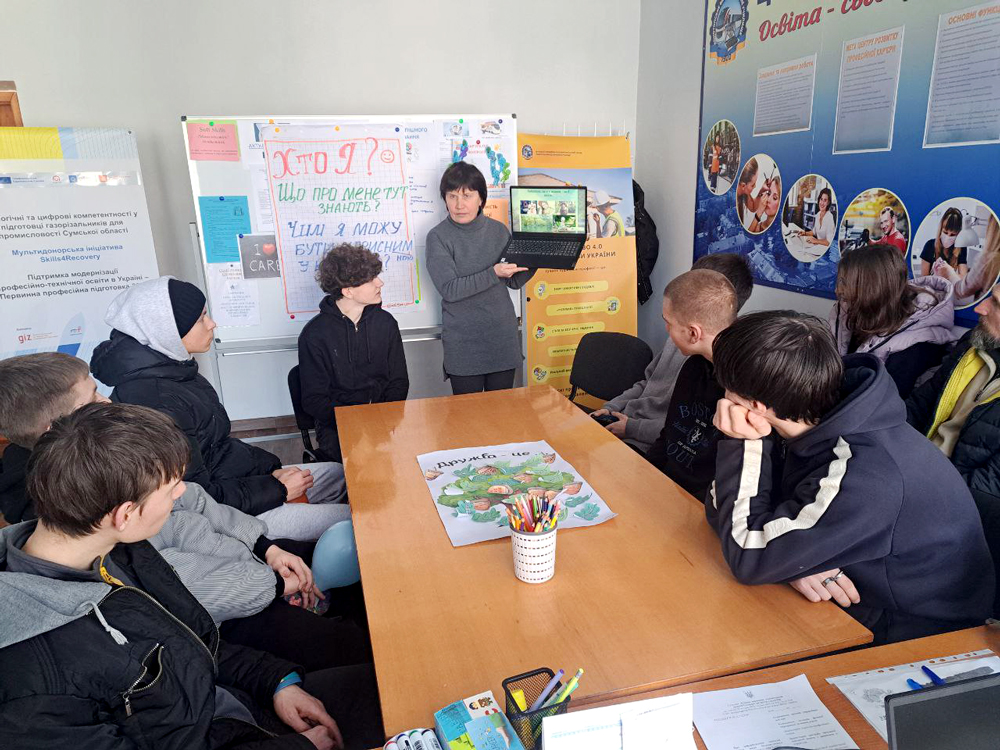
Teacher Olena shared the following: “Peace education immediately captured my interest. Through constant communication with university students, I have come to understand better than anyone how important it is to spread the values of peace and mutual understanding in modern society.”
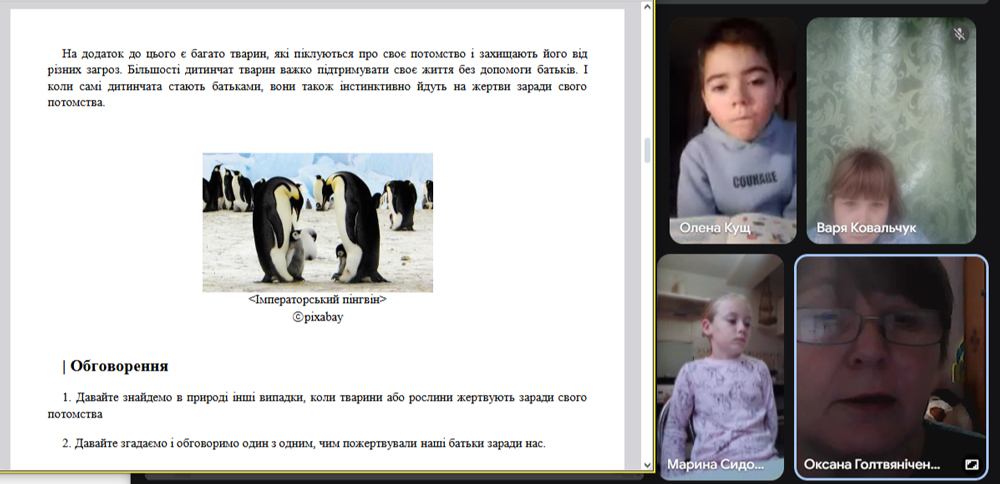
Teacher Oksana shared the following: “Through this training, I wanted to help our children (ages 6–7) understand what peace is, because they have not experienced a single peaceful day since their memories began.”
Beyond Education: Rethinking the Role of Teachers
Educators in Ukraine shared that this training went beyond a simple professional experience and became an opportunity for inner transformation.
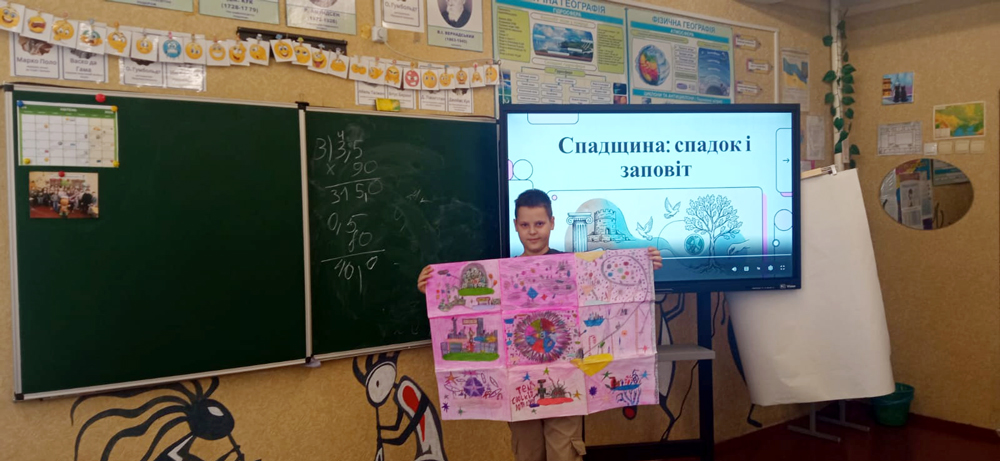
Vice Principal Oleksandra stated, “After the training, I began to pay more attention to the emotional well-being of my students.” She added that she now sees herself not merely as someone who delivers knowledge, but as a mentor and supporter for her students—especially during difficult times.
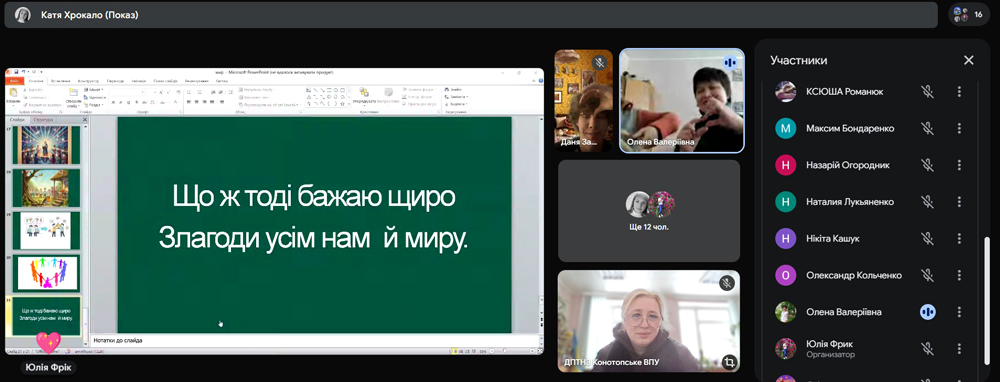
Teacher Olena also experienced this change. She shared that the training helped her find inner balance and better understand how to support university students. “Today, the role of a teacher or librarian is not simply to deliver knowledge or lend books. Above all, it is to create a safe space where students can feel at ease,” she explained. She views her work as a calling—helping young people build an inner foundation and empowering them to create peace within themselves and in their surroundings.
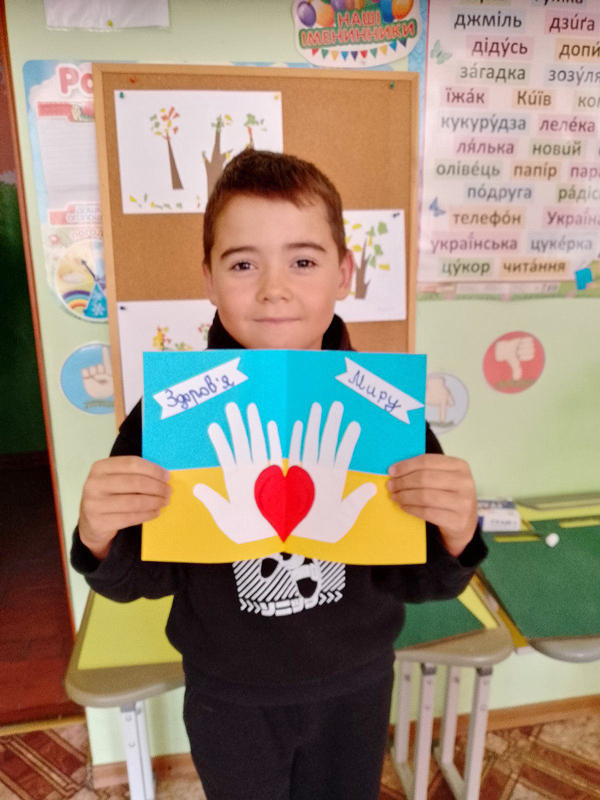
Teacher Oksana emphasized: “After completing the training, I realized that peace ultimately begins with changing the way we see ourselves and the world. It is important to show children the values of peaceful coexistence from an early age.”
Peace Education in the Classroom: How It Is Implemented
Ukrainian educators continue teaching despite challenging conditions, including air-raid alerts, power outages, and ongoing emotional stress. Teacher Oksana expressed her confidence, saying, “If even part of these teaching materials is consistently applied in educational activities, it will certainly have a positive impact on helping children grow into citizens of peace.”
Despite the hardships of full-scale war, the educators who completed the training have begun introducing peace education in their respective institutions, delivering the values of peace to young people in various ways through their everyday educational activities.
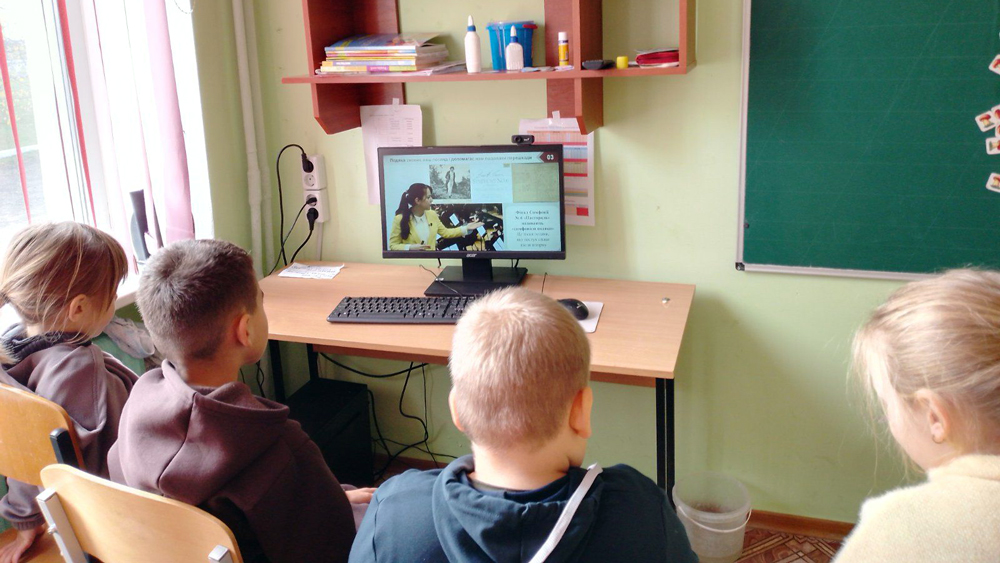
Teacher Oksana explained how she applies peace education in remote classes for children aged 6–7: “It is often difficult to conduct fully effective classes remotely. Nevertheless, I incorporate elements of peace education into almost every lesson.”
She helps children learn to resolve conflicts through role-playing and discussions, noting that these methods are also effective for understanding new concepts and applying them in real life.
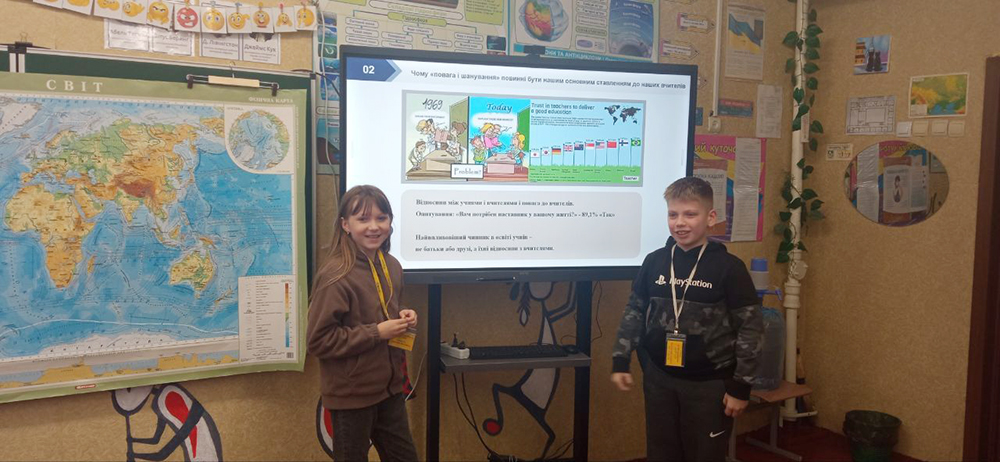
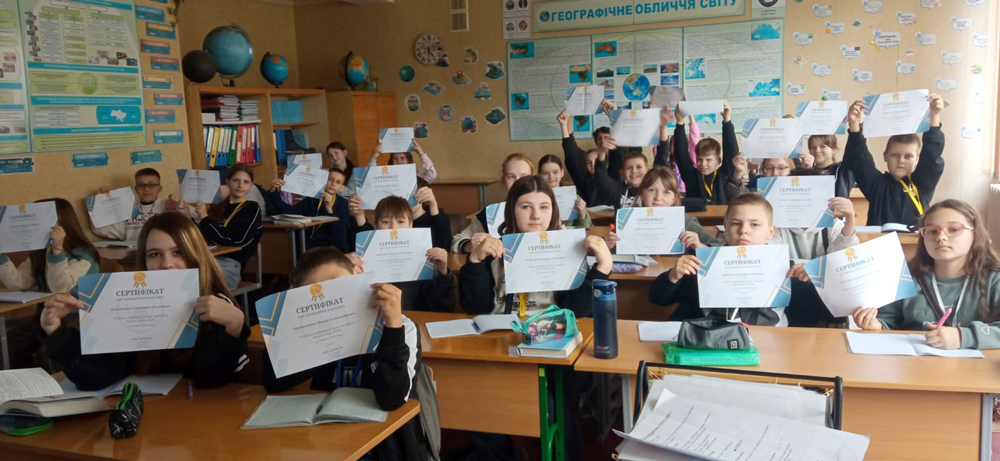
At Dnipro Primary and Secondary School No. 140, Vice Principal Oleksandra, together with seven fellow teachers who completed the HWPL training and obtained certification as peace education teachers, conducted peace classes for elementary and middle school students. A total of 169 students participated in and completed the program.
Oleksandra incorporates interactive activities, role-playing, and discussions into her lessons. “Students respond very actively to peace classes. It is especially impressive to see moments when they open up, share their thoughts and experiences, support one another, and begin to understand each other more deeply,” she said.
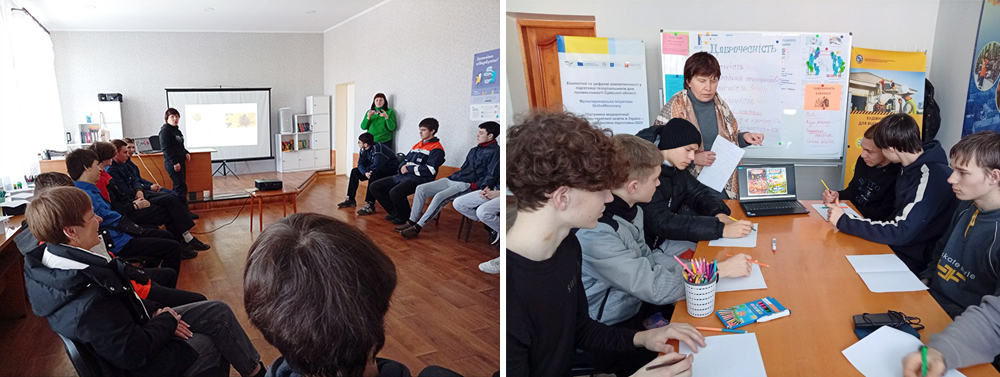
At Konotop Higher Vocational School, Teacher Olena conducted HWPL peace classes for 25 college students. She led the classes with a focus on dialogue and sincere communication, and through the lessons, she observed meaningful changes: students listened more attentively to one another, expressed gratitude more often, showed greater respect toward their teacher, and experienced fewer conflicts.
Peace Education as Psychological Support in Wartime
In a wartime context, peace education takes on a particularly meaningful role. According to Vice Principal Oleksandra, peace education helps reduce students’ levels of anxiety, contributes to emotional stability, and improves the overall classroom atmosphere.
This aspect also holds deep meaning for Teacher Olena. “In a time of war, peace education is not just a subject—it is a life-protecting shield that safeguards the souls of children. This approach helps young people maintain inner balance, support one another, and learn how to respond to difficult situations without aggression.”
Teacher Oksana stated that in the context of an ongoing full-scale war, “Peace education will help children maintain psychological resilience and a sense of national identity.” She also added regarding the effects of the lessons, “After class, the children usually become much calmer.”
Peace Education Is an Investment in the Future
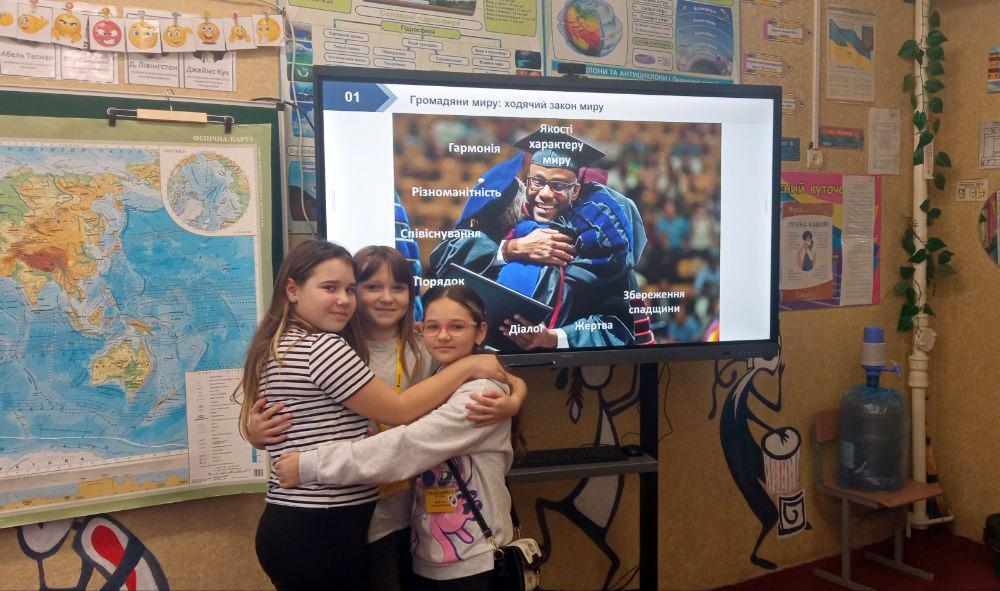
Peace education in Ukraine is steadily expanding—from kindergartens and primary and secondary schools to vocational and higher education—becoming an investment for the future of today.
Teacher Olena emphasized that Ukraine needs not only skilled professionals, but also conscious “citizens of peace” who can cooperate with one another, respect the law, and build sincere relationships. She further shared her plan to establish a “peace hub” within the library—a space where university students can receive support and restore their inner balance.
Teacher Oksana emphasized the importance of peace education, stating, “Peace education fosters the critical thinking and values necessary for post-war recovery, democratic development, and social cohesion.”
Vice Principal Oleksandra added, “After the war, these very children will become the foundation for rebuilding the nation. Peace education is not just education—it brings inner transformation, inspiration, and a new perspective on the role of education.” She highlighted that peace education is the most reliable investment in preparing for the future beyond the wounds of war.
Ukrainian educators spoke with one voice, calling on both domestic and international colleagues to actively participate in peace education projects.
Teacher Olena expressed this appeal:
“Please join us. Let us raise not just skilled professionals, but humane and conscious ‘citizens of peace’ who understand the values of gratitude and respect. Let us all contribute so that the future of Ukraine—and the world—can be built not on conflict, but on mutual understanding.”