
From the War Memorial to Gyeongbokgung Palace… World Youth Discover the “Value of Peace” in Seoul
Exploring the Meaning of Peace and Coexistence Through Cultural Heritage, Extending into Community Peace Activities Across the Globe
Youth from 43 countries gathered in Seoul. They participated in an international youth exchange program that invited them to visit Korea’s historical and cultural heritage sites, places that hold the history of the Korean War and the division of North and South Korea, to learn the values of peace, coexistence, and mutual understanding. From the War Memorial of Korea, which holds the memories of war and division, to Insadong, Gwanghwamun, and Gyeongbokgung Palace, spaces familiar to Koreans are becoming classrooms where young people from around the world learn about peace.
From september 17 to 19, HWPL held the “HWPL International Youth Peace Program” over three days.
Held under the theme “We, the Living Legacy of Peace,” the program consists of three stages: Discover, Learn, and Act. The goal was for the young people participating in the program to put into practice, within their own communities, the values of peace they discover and learn in Korea.
The program was structured as a three-day journey in which participants discover the necessity of peace through the memory of war, learn understanding and respect through different cultures, and connect the choices and responsibilities found in history to practical action today.
Day 1
Discover — Discover Peace from Cultural Heritage
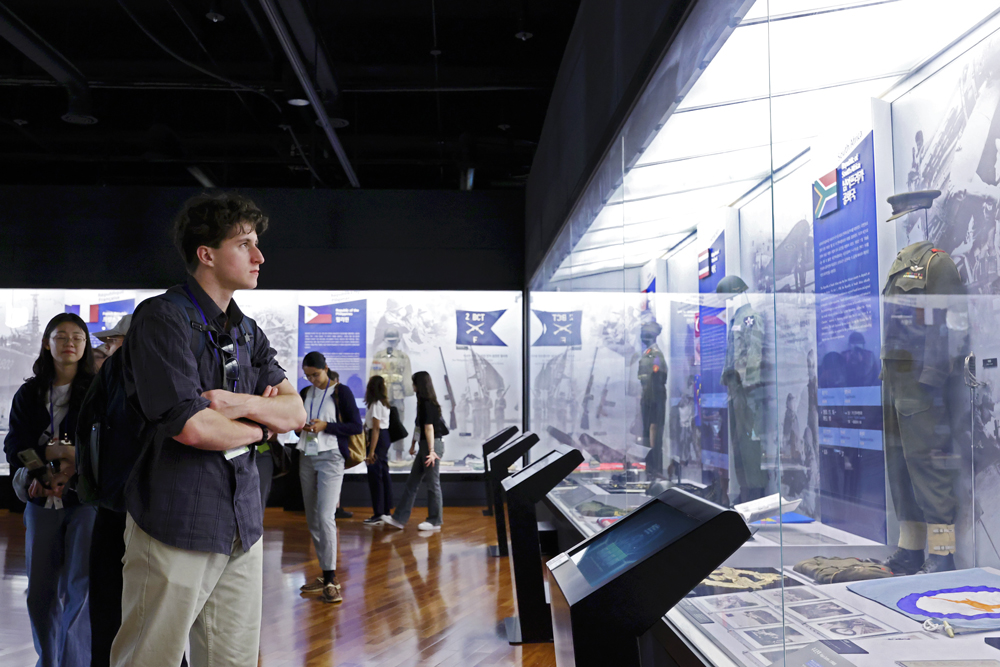
Youth from around the world view an exhibition at the War Memorial of Korea
On the first day, September 17, the young participants toured the War Memorial of Korea, including the Korean War Room, the UN Room, the UN Monument, and the Statue of Brothers, reflecting on the wounds that war left on individuals, families, and the youth generation. HWPL asked the young participants, “What does peace mean to me, and what can I do to protect it?” It was a moment to reconsider that while past generations of young people bore the sacrifices of war, today’s youth can become the ones who actively build peace.
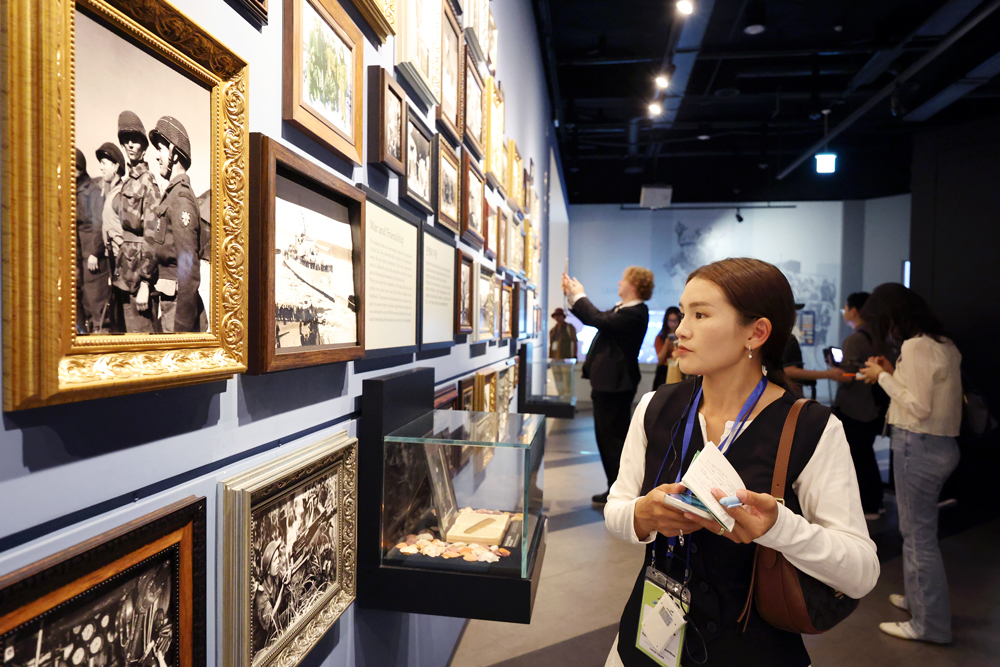
A participant views wartime photographs and records at the War Memorial of Korea
Mrs. Laisani sepo, Chairwoman of the National Youth Council of Fiji (NYCF), said after visiting the War Memorial, “The young ones were trying to protect their areas and willing to give up their lives even though they saw the risk, the death in front of them. It takes strong willpower to keep moving forward despite the challenges and criticism we may face in building peace.”
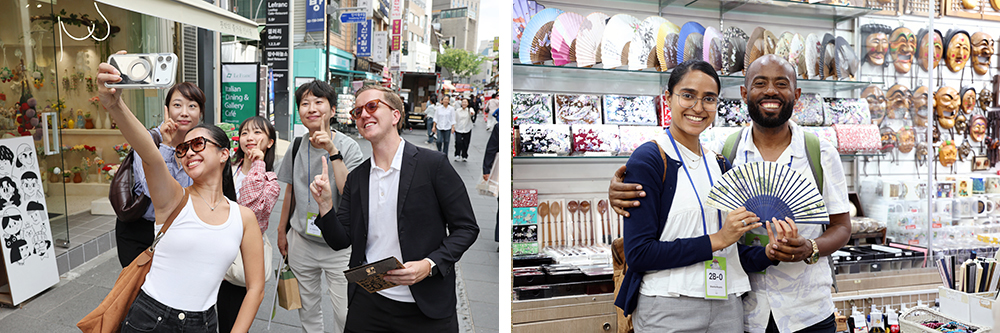
At Insadong, participants explored traditional Korean culture firsthand, experiencing how “understanding” an unfamiliar culture leads to “respect,” which acknowledges each other’s differences, and how that respect in turn leads to “exchange” between people.
Mr. Alwand Talaat Jawhar Caluri, Program Director of Public Aid Organization from Iraq, said, “It is important to provide a safe and inclusive space where young people from around the world and from different religious backgrounds can share their thoughts and concerns about peace.” He added, “This kind of gathering can serve as a platform for exchanging best practices and learning from one another, allowing young people to benefit from each other’s experiences.”
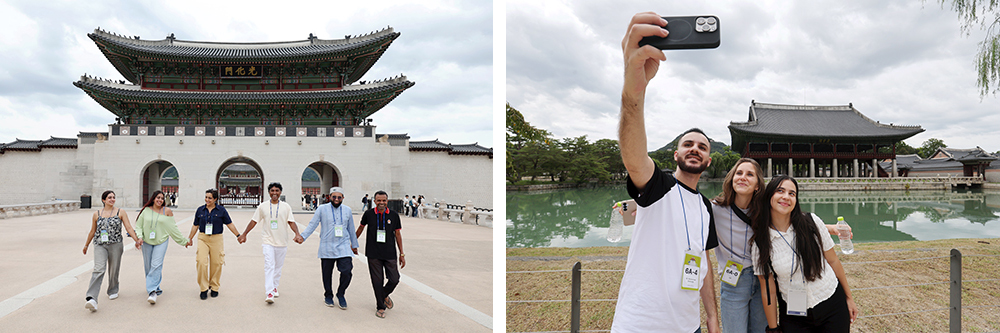
At Gwanghwamun and Gyeongbokgung Palace, participants explored the meaning of peace through five keywords: Inheritance, Respect, Responsibility, Change, and Harmony. In particular, through the examples of King Sejong the Great, the Hall of Worthies (Jiphyeonjeon), and the creation of Hangeul (Hunminjeongeum), they examined how a leader’s choices and learning can bring about change for society and future generations. The young participants each chose one of the five values they wanted to put into practice and recorded, in their own words, what actions they would take upon returning home.
Mr. Andrew Junior Mwima, Chief Executive Officer (CEO) of Mental Health and Anti-Drug Abuse Organisation, stated, “Young people are the ones sent to war. It means the young people can be the ones leading peace initiatives on the front lines.” He added, “Youths are not the future leaders. We are the leaders of today.” emphasizing that young people should take a leading role in peace initiatives and community development.
Day 2
Learn — Learn Peace from History & Begin a Journey of Deeper Understanding
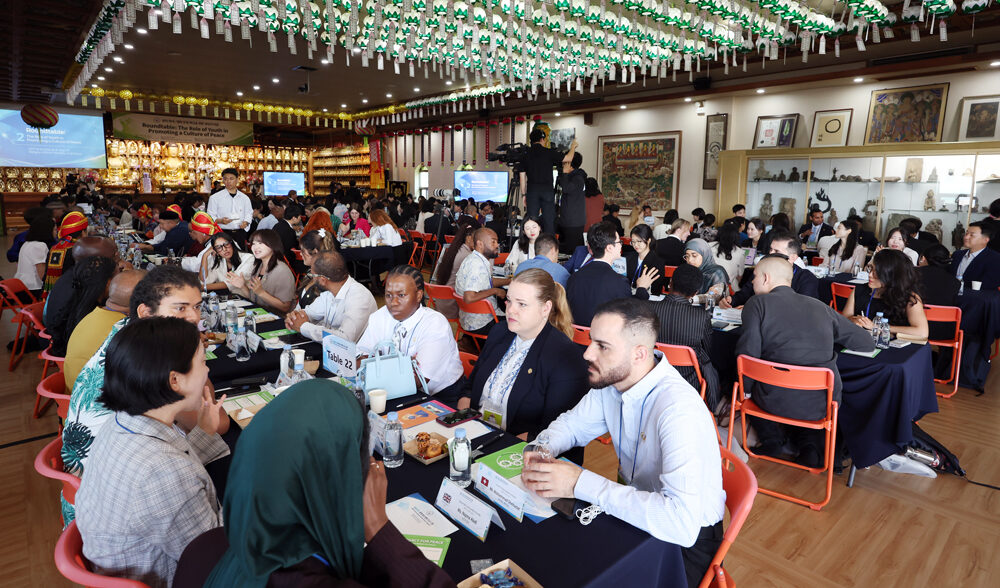
Participants discuss the role of youth in spreading a culture of peace
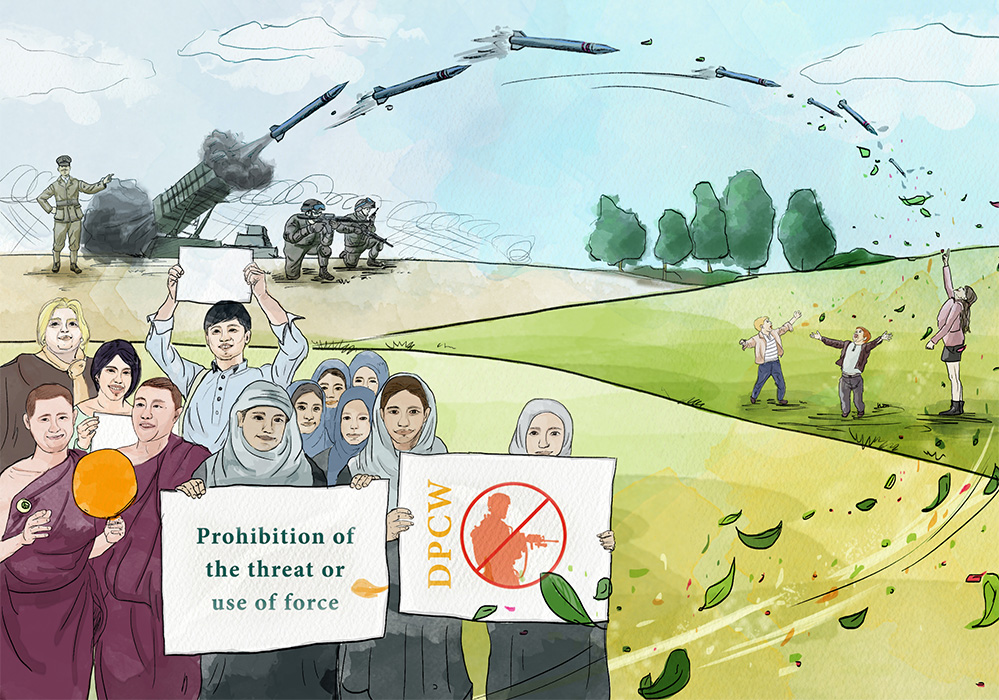
The “Discover” phase of the 17th led into the “Learn” phase on the 18th. The roundtable discussion was held that day on the theme of “The Role of Youth in Spreading a Culture of Peace.” The discussion was designed to help young people first understand and learn how to prevent religious beliefs and ethnic identities from being used as pretexts for violence and conflict, based on Articles 8, 9, and 10 of the Declaration of Peace and Cessation of War (DPCW). Articles 8, 9, and 10 of the DPCW set out principles on preventing war, resolving conflict, promoting peace among religions and ethnic groups, and spreading a culture of peace.
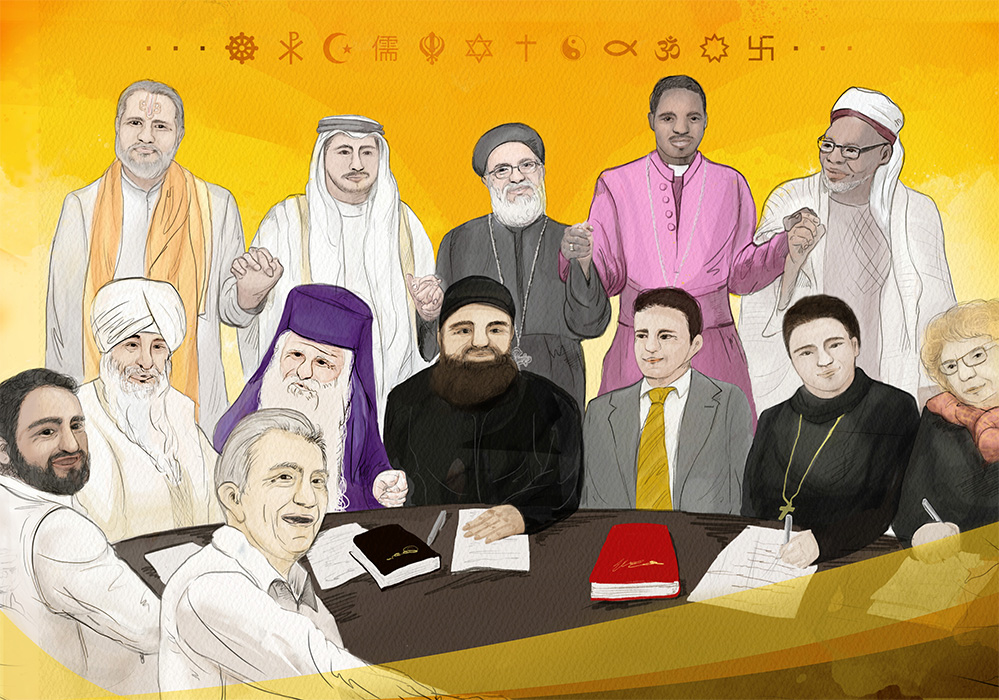
This was followed by the “International Religious Peace Academy for Youth Leaders,” where participants examined the scriptures and teachings of Buddhism, Confucianism, Christianity, Islam, and Hinduism to broaden their understanding of different cultures and religions.
Day 3
Act — Act on Peace & Become a Living Legacy
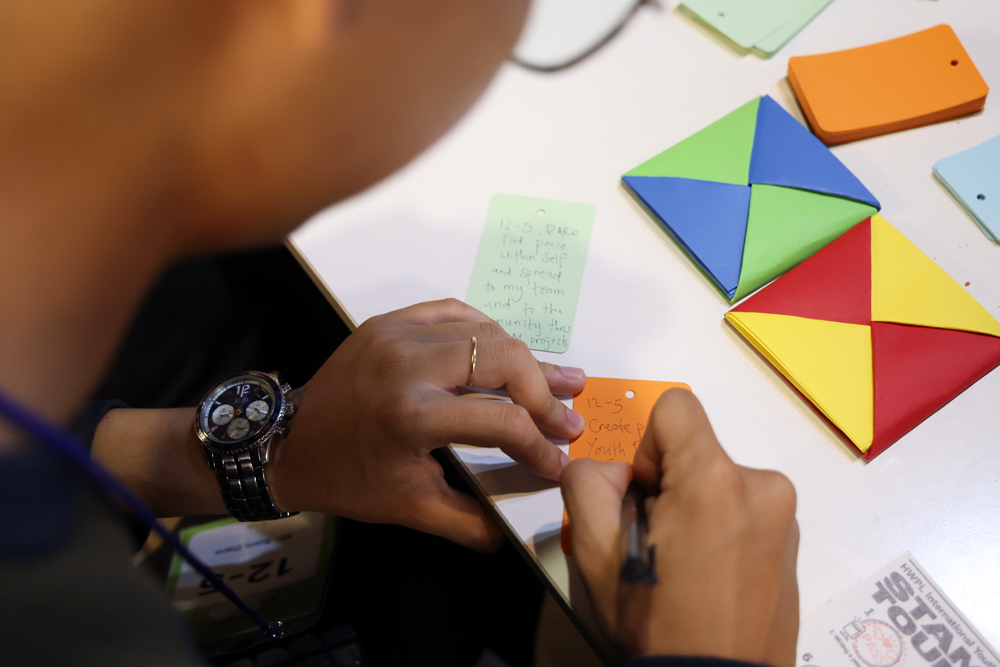
A participant takes part in a peace activity program
The “Learn” phase of the 18th led into “Act,” the final phase, on the 19th, the day the values discovered and learned earlier are put into actual practice. Participants shared regional activity case studies from the Youth Engagement & Peacebuilding Working Group(YEPW), where young people plan and carry out their own peace activities. Building on this, they discussed implementation strategies for regional YEPW projects and further developed their 2027 action plans and individual roles.
HWPL Secretary-General Kang Tae-ho said, “Youth from around the world directly encountered the necessity of peace on this land of war and division.” He added, “Peace is not a legacy we inherit, but a legacy we must pass on to future generations forever. Youth peace leaders are the ones who must carry that forward. I hope participants will take the answers they found in Korea and turn them into action in their own countries.”
Ms. Sarah Vermaut, a law student at the Free University of Brussels (VUB) in Belgium, said, “I am just a student. Why would they listen to me? But if we think like that, we cannot change anything.” She added that she wants to share what she has learned with her peers and organize activities that other young people can take part in.
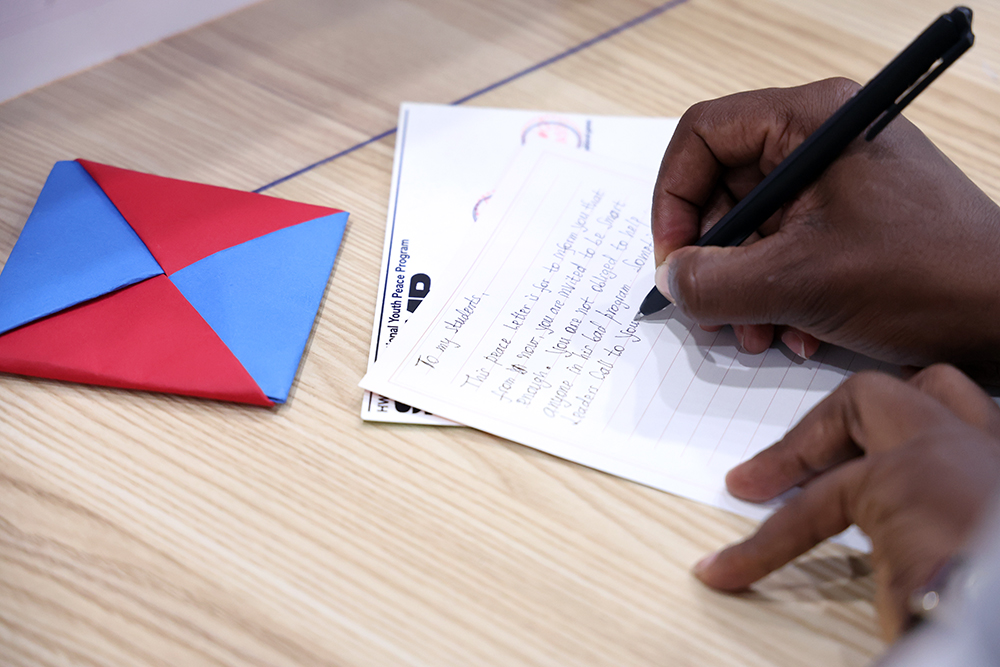
Participants write letters about their thoughts and commitments to peace
From the memories preserved at the War Memorial of Korea, through the history of Gwanghwamun and an understanding of different religions and cultures, to concrete commitments for action in their communities, young people from 43 countries left Korea with a shared commitment to become agents of peace in their own communities. The answers they found in Korea are expected to translate into concrete action through YEPW initiatives in 2027 and their respective community activities.