
[Lesotho Special] No More Conflict—Children in Lesotho Choose Peace
How HWPL Peace Education Is Transforming Schools Across Lesotho
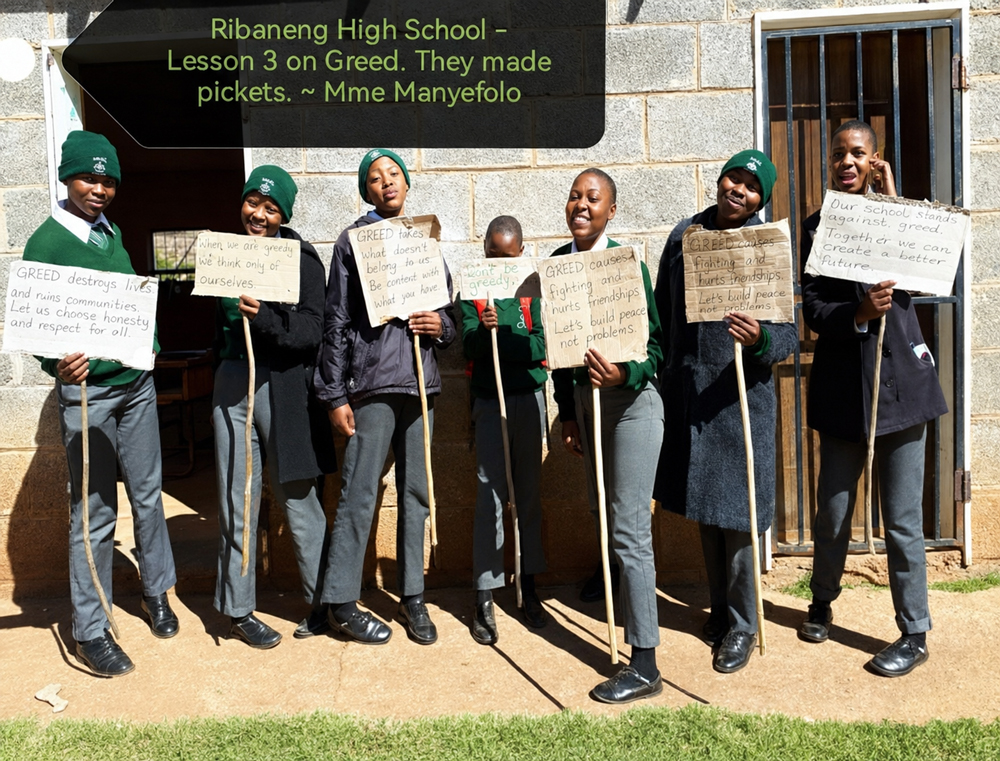
In a small rural village in southern Lesotho, a 16-year-old who grew up in a school once plagued by class boycotts and vandalism puts it simply:
“The fights have really gone down. Now we sort it out among ourselves, or we talk to the Peace Minister.”
— Relebohile Maseru, Grade 10, Ribaneng High School, Lesotho
Peace Minister is not a government post. It is a role students take on themselves, through student-led governance. When conflict comes up, classmates go to this student representative instead of a teacher to talk it through. So how did this all start?
Children Who Used to Walk Out
Lesotho is a small kingdom in southern Africa. More than half the population—54.7%—lives below the poverty line, and youth unemployment sits at 34%. Even finishing school does not guarantee a job, and 40% of young people are left with no education, no work, and no training to fall back on. There is a safety net on paper, but it rarely reaches the people who need it. Schools exist, but for many kids, they haven’t been enough to change where life is headed.
That frustration does not stay outside the school gates. Researchers who have studied schools in Lesotho point to widespread verbal and physical violence among students, tracing it back to poverty, broken families, absent parents. When nobody seems to be listening, there aren’t many ways left to be heard. Walking out of class was one of them.
Relebohile puts it this way:
“When someone goes on strike, it means they feel ignored or unheard, so they pause everything. Students don’t attend class because they want their complaints to be heard.”
— Relebohile Maseru, Grade 10, Ribaneng High School, Lesotho
When Puleng Nkaleche took over as principal of Ribaneng High School in 2019, the school was barely holding together. Class boycotts and vandalism kept happening, enrollment had fallen below 100 students, and trust between teachers and students had all but disappeared—made worse by lingering tension from the change in leadership. Puleng went looking for help, first from the Ministry of Education, then from school administrators.
“I knew something had to change. I just didn’t know where to start.”
— Puleng Nkaleche, Principal, Ribaneng High School, Lesotho
That search eventually led her to HWPL through DPE—the Development for Peace Education. DPE is a Lesotho-based civil society organization that partners with HWPL to bring peace education into schools nationwide. It now runs teacher training and workshops in more than 24 schools across eight regions of Lesotho, helping peace education take root not as a one-off lesson, but as part of everyday school life.
The Students Who Became Peace Ministers
HWPL Peace Education works by helping students build peaceful attitudes and values inside the school first, so they can carry them into everyday life and into society later on. Through it, students learn values that are deeply tied to real life—diversity and cooperation, coexistence and harmony, selflessness and sacrifice, love and care for nature, respect for elders. And they do not just learn about these values—they practice them right there in the classroom. Respect and consideration toward classmates. Respect and courtesy toward teachers. None of it stops when the bell rings; it carries on through the rest of the school day. This wasn’t knowledge memorized from a textbook—it was something the children learned with their whole selves. And that’s what changed them.
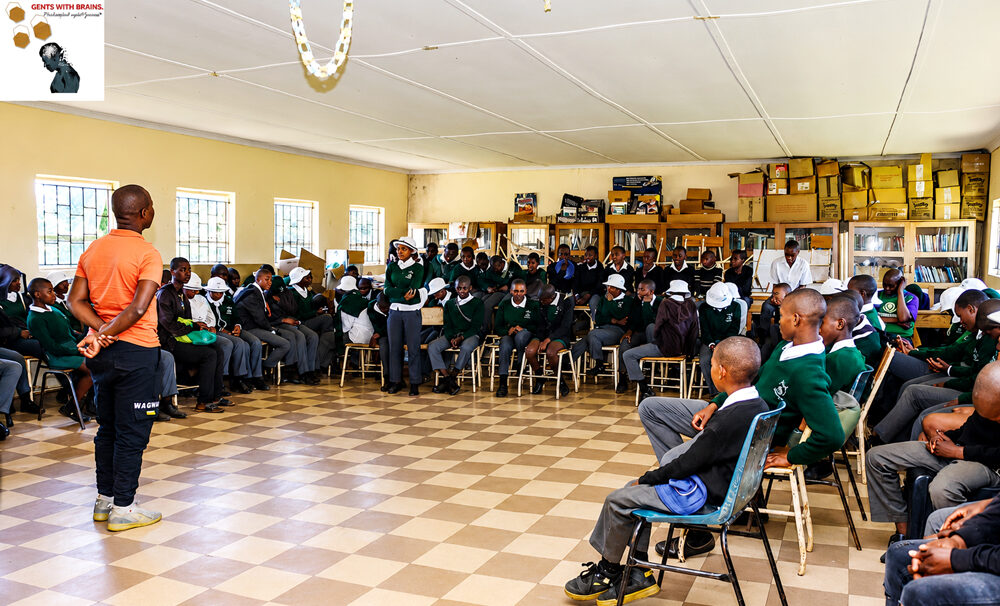
After Puleng brought peace education into the school, the first thing that shifted was how the school was actually run. Students started taking part directly. A Peace Minister, an Education Minister, a Food Security Minister, a Finance Minister. Student representatives took on real responsibilities, working through actual school problems together. Instead of boycotting the class when something went wrong, they learned to raise their concerns through their own representatives.
“These weren’t just students anymore. They were the Peace Minister, the Education Minister, the Food Security Minister, the Finance Minister. And they actually solved problems.”
— Puleng Nkaleche, Principal, Ribaneng High School, Lesotho
In 2020, a shortfall in the sports budget put the school’s participation in a competition at risk. In the past, that kind of frustration might have turned into a boycott. This time, the student council put together a fundraising plan and carried it out themselves. Faced with a real budget problem, the students found their own answer—and made it to the competition.
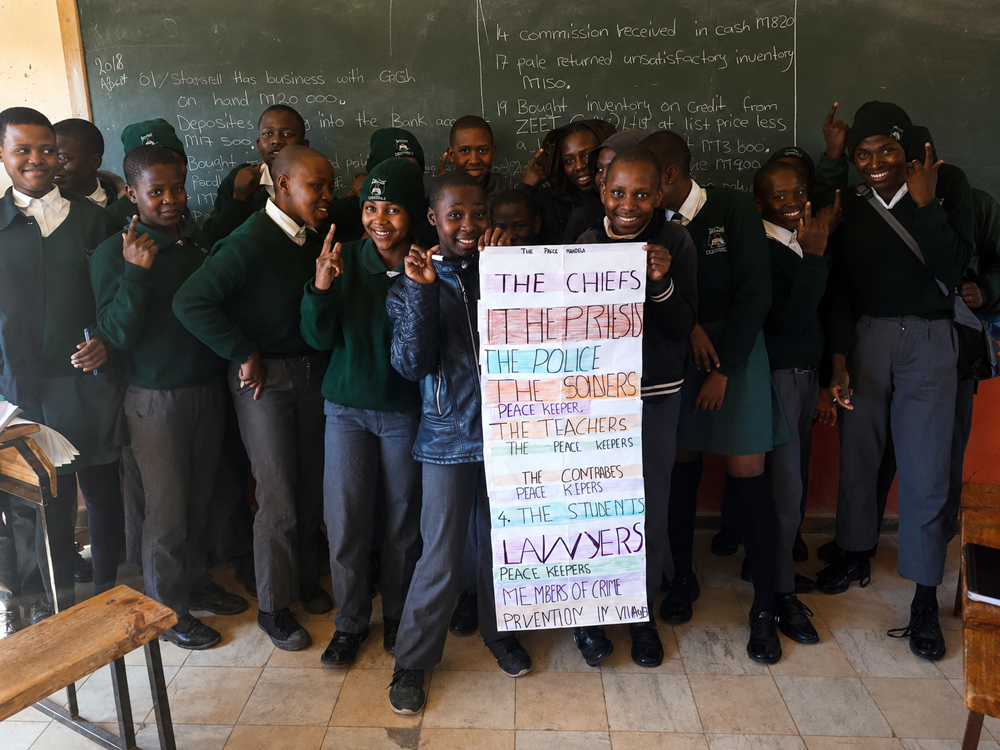
Ribaneng High School
Not every teacher was on board right away. For some, the whole approach felt unfamiliar, even like one more thing piled onto an already full workload. But the shift came, slowly and then unmistakably. These days, those same teachers are the ones incorporating peace education into their own lessons. Teacher Maseilatsatsi Serobinyane puts it this way:
“I hope every teacher carries the message of peace wherever they go, and actually practices peaceful ways of resolving conflict.”
— Maseilatsatsi Serobinyane, Teacher, Ribaneng High School, Lesotho
The change didn’t stop at the school gates. Relebohile once watched a friend step in to settle a money dispute between her younger brothers at home. Instead of running to their parents, the friend sat the boys down and talked it through calmly. The shift Relebohile describes—it started right there in that classroom.
What the students first practiced at school was now quietly spreading into their homes, and into their villages.
Peace, in Its Own Way, Across Lesotho
Ribaneng wasn’t the only one. All across Lesotho, the same kind of shift was happening — each school finding its own version of it.
Morifi Community High School—Peace That Changed the Grades Too
In 2021, Noangelina Debeshe, principal of Morifi Community High School in Lesotho, encountered peace education through DPE for the first time. At first, only she and one teacher signed up for the training.
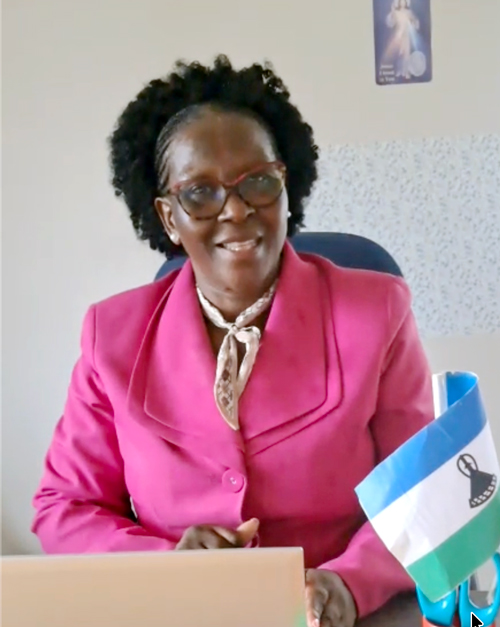
“It started with me and one teacher. Just the two of us. But we started anyway. That’s how the seed of peace got planted.”
— Noangelina Debeshe, Principal, Morifi Community High School, Lesotho
When she returned and told the rest of the staff what she had learned, every single teacher signed up on their own. A few were hesitant at first, but over time, as they worked through it together, the school became one team. Every Monday turned into Peace Education Day, with students choosing for themselves which value they would practice that week.
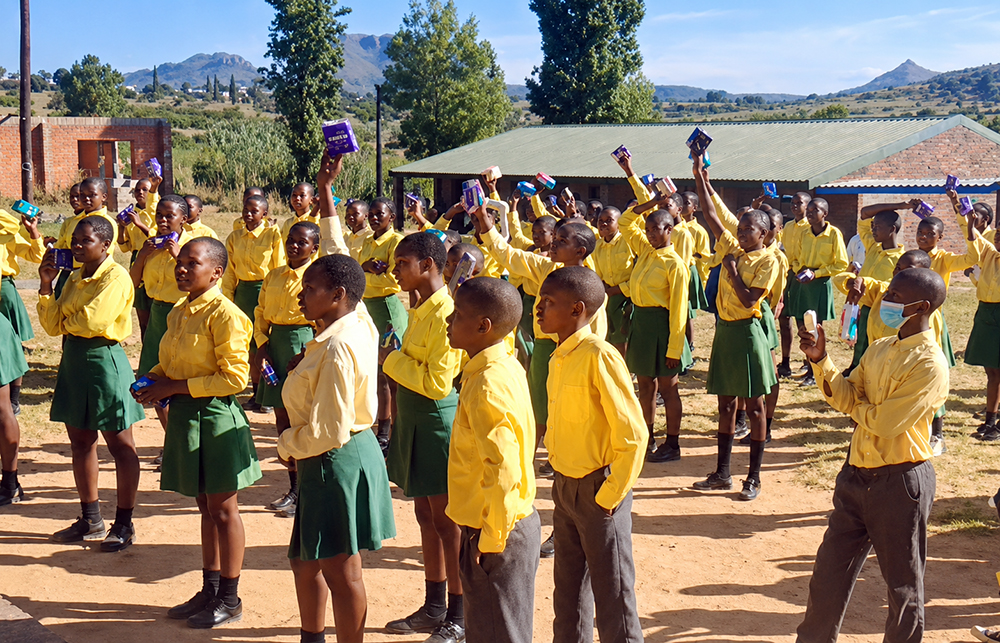
Morifi Community High School
Teacher Mpontseng Letsela explains that the lessons were never about facts from a textbook—they covered things students actually run into in real life: diversity and cooperation, coexistence and harmony, selflessness and sacrifice. Every Monday morning at assembly, students would present what they had learned, then practice it all week. The change went well beyond fewer fights. When conflicts came up, kids stopped going to find a teacher—they sat down and worked it out themselves. They said thank you first. They reached out first.
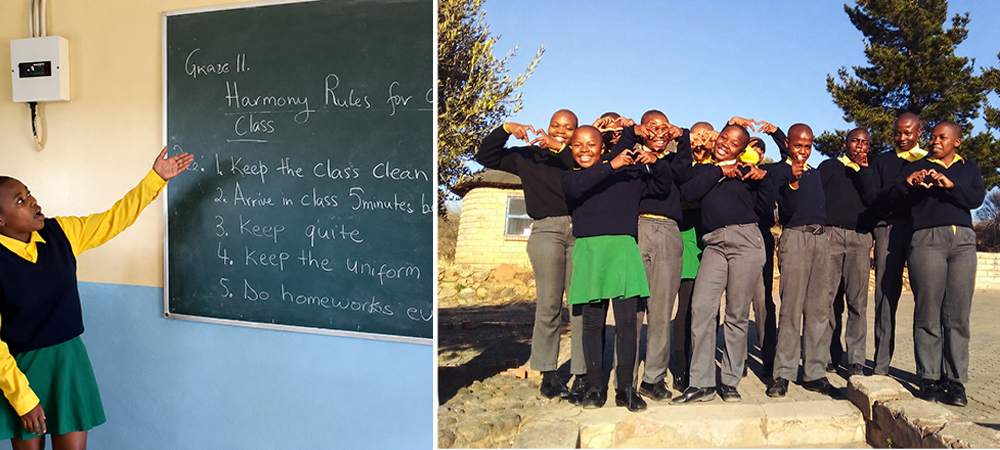
Morifi Community High School
As conflict eased and classrooms settled down, students were finally able to focus on actually learning. That shift showed up in the numbers too. Lesotho’s Examination Council ranks top schools based on the share of students earning strong final exam results. In 2024, Morifi Community High School placed eighth nationally, landing on Lesotho’s Top 10 list. When Noangelina heard the news, she cried—happy tears.
“This is thanks to peace education. Teachers and students learned these values and lived them, and the classroom changed because of it. That change carried all the way through to the grades.”
— Noangelina Debeshe, Principal, Morifi Community High School, Lesotho
Lekopa Community Primary School—The Child Who Said Sorry First
Malethako Mariam Khabele has led Lekopa Community Primary School for nine years now. Resources are tight, but she is committed to helping her students build the values and the character they need to live peacefully with others. She teaches lessons herself twice a week, walking the children through what it means to respect one another and say thank you.
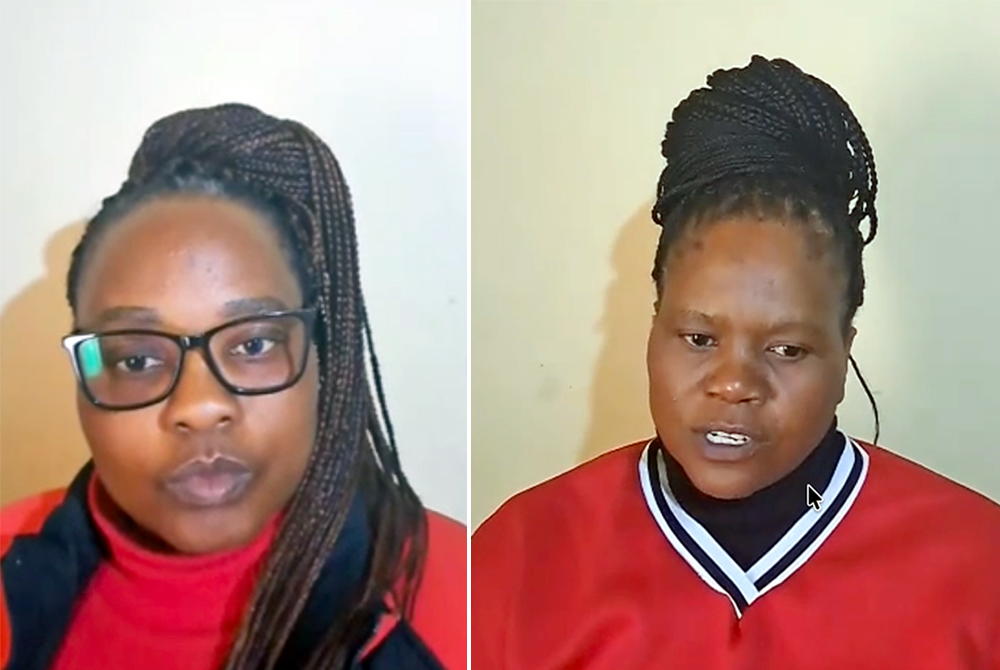
The Principal and Deputy Principal of Lekopa Community Primary School
Deputy principal Makopano Chaka has watched the kids learn to talk through conflict instead of fighting over it. They are growing into children who say thank you first, who treat each other with respect. Chaka says teaching them has reminded her, all over again, just how much weight an educator’s role really carries.
The students took what they learned in class and put it into practice. They made thank-you cards for their parents, each one different, each one carrying something personal. And the change kept showing up inside the classroom too.
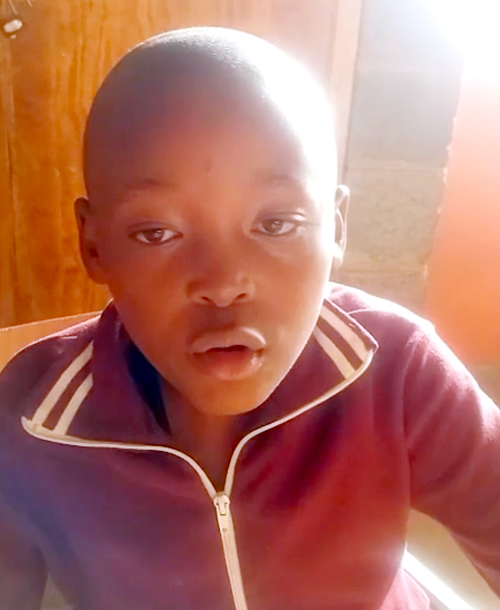
“Manini pushed Katleho — and right away, came back and said sorry.”
— Bohlokoa Lisene, Grade 4, Lekopa Community Primary School, Lesotho
One sentence from a nine-year-old says more about what’s changed in that classroom than almost anything else could.
A Hundred Teachers, In One Room
An event held in Maseru this past March made one thing clear: this isn’t a story limited to a handful of schools.
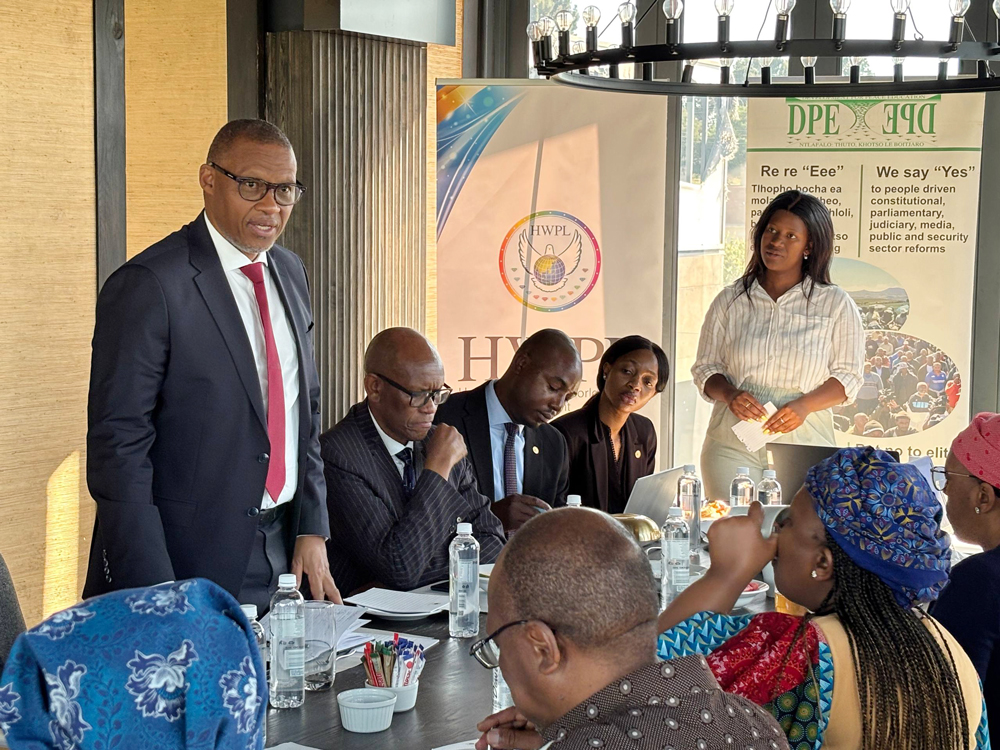
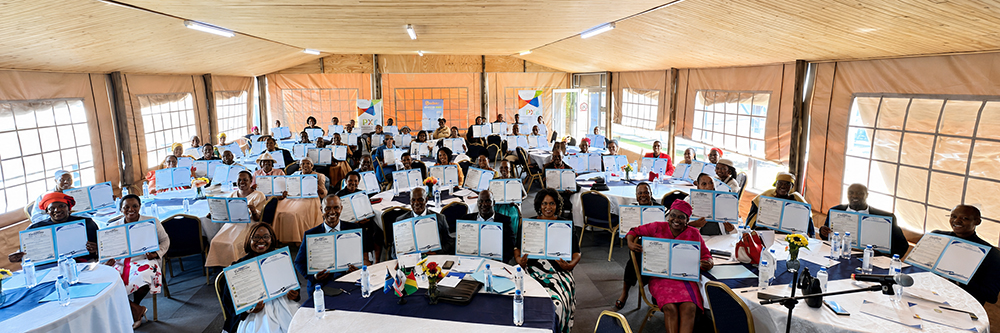
HWPL and DPE jointly hosted a graduation ceremony for peace teachers. Around 100 teachers from across Lesotho filled the room that day, each having completed peace teacher training. Lesotho’s Deputy Minister of Education and Training attended in person, giving the occasion official weight.
“Conflict and violence can’t be solved just by changing systems. Something has to shift inside people too — their values. That’s exactly why the role of teachers, who are right there with students every day, matters so much.”
— Deputy Minister of Education and Training, Lesotho
The Deputy Minister also said he hoped to see peace education become part of the national public school curriculum. The ceremony closed with all 100 teachers reading a pledge together—the Peace My Lesotho pledge, a commitment built on the idea that peace in Lesotho starts with each individual.
Together, the teachers made four promises. First: to keep teaching peace education, holding onto the belief that peace isn’t just a slogan, it is something you do. Second: to keep studying and sharing solid, well-researched peace education content. Third: to turn their own schools into places defined by respect and care. And fourth: to trust that even their small, individual efforts are stepping stones toward a peaceful Lesotho — and to build local networks that carry that work forward.
Peace education has brought real recovery and hope to our school and our students. Now our teachers are becoming the ones who carry that message of peace to the next generation.”
— Puleng Nkaleche, Principal, Ribaneng High School, Lesotho
When the ceremony wrapped up, the 100 teachers headed back to their own schools. The fact that 100 teachers in Lesotho have now completed peace teacher training—and that the Ministry of Education showed up to be part of it—says something. Peace education in this country is no longer confined to individual schools. It’s becoming a national movement.
Where Peace Becomes the Culture of a Classroom
Noangelina doesn’t take credit for the Top 10 result. She says it belongs to the teachers and students, who each did their part—and that, if anything, the achievement has made her more humble, not less. She doesn’t want this change to stop at one school. She went straight to the Minister of Education herself, to share what peace education had done at Morifi. It was Noangelina who took that step, hoping peace education might one day find a home in every public school in Lesotho. To anyone weighing whether to try it, she has this to say:
“It’s possible. It worked at our school. Give it a try. Peace starts with one person, then spreads — to a family, a school, a village, a country.”
— Noangelina Debeshe, Principal, Morifi Community High School, Lesotho
At Ribaneng, Relebohile still reaches for dialogue, not conflict, when something comes up among friends. At Morifi, kids still decide every Monday morning which value they will live out that week. And in Lekopa, nine-year-old Bohlokoa learned something the day she watched a friend say sorry, unprompted. Three schools, three different places, three different paths to get here—but the children walking through them are all growing in the same direction.
With a hope that every child in Lesotho might one day grow up learning peace, classrooms across the country are—one by one—becoming places where peace is not just taught. It is lived.
References
- BTI 2026 Lesotho Country Report — https://bti-project.org/en/reports/country-report/LSO
- World Bank Blog, “Basotho youth have what it takes to transform the economy”, 2024 — https://blogs.worldbank.org/en/africacan/basotho-youth-have-what-it-takes-transform-economy-they-just-need-right-support
- De Wet, N.C., “School violence in Lesotho”, Africa Education Review, Vol. 6, No. 1, 2007 — https://files.eric.ed.gov/fulltext/EJ1150041.pdf
- DPE–HWPL Peace Education Teacher Graduation Ceremony, Maseru, March 2026 — https://www.sorotnews.co.id/hwpl-gelar-wisuda-guru-pendidikan-perdamaian-di-lesotho-dorong-pencegahan-konflik-melalui-pendidikan/