
Philippines, Indonesia Host ‘Interfaith Forum on Ethical Leadership’
HWPL Pledges Continued Education on ‘Ethical Leadership’
Learning Ethical Leadership Through the Religious Peace Academy, a Platform for Rearing Young Leaders
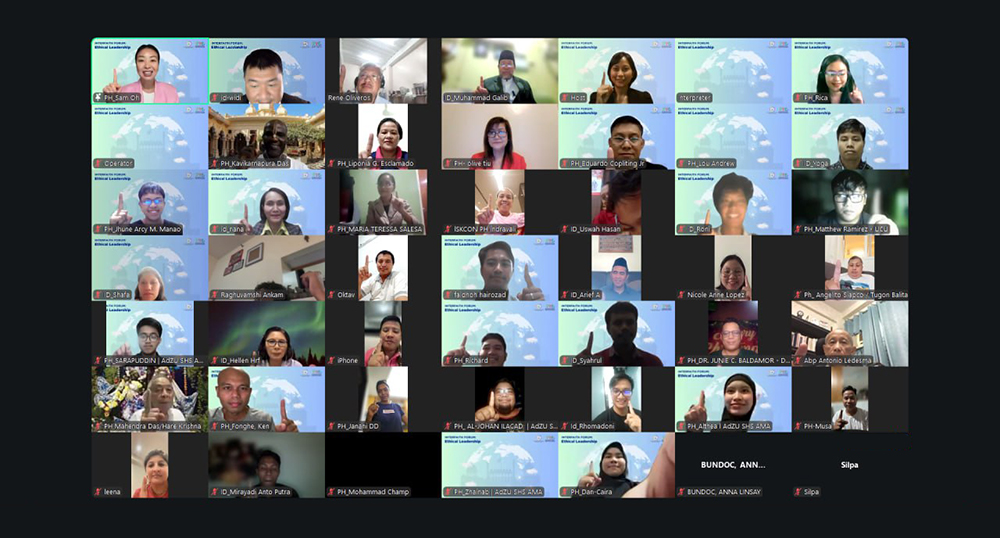
On November 29, the “Interfaith Forum on Ethical Leadership” was held online in the Philippines and Indonesia. Under the subtitle “Fostering Ethical Leadership Through Shared Interfaith Perspectives from Indonesia and the Philippines,” the forum was jointly hosted by HWPL Philippines and IPYG Indonesia. Religious leaders, education experts, and young leaders from both countries attended the event.
Discussing Ethical Leadership Amid Corruption and Distrust
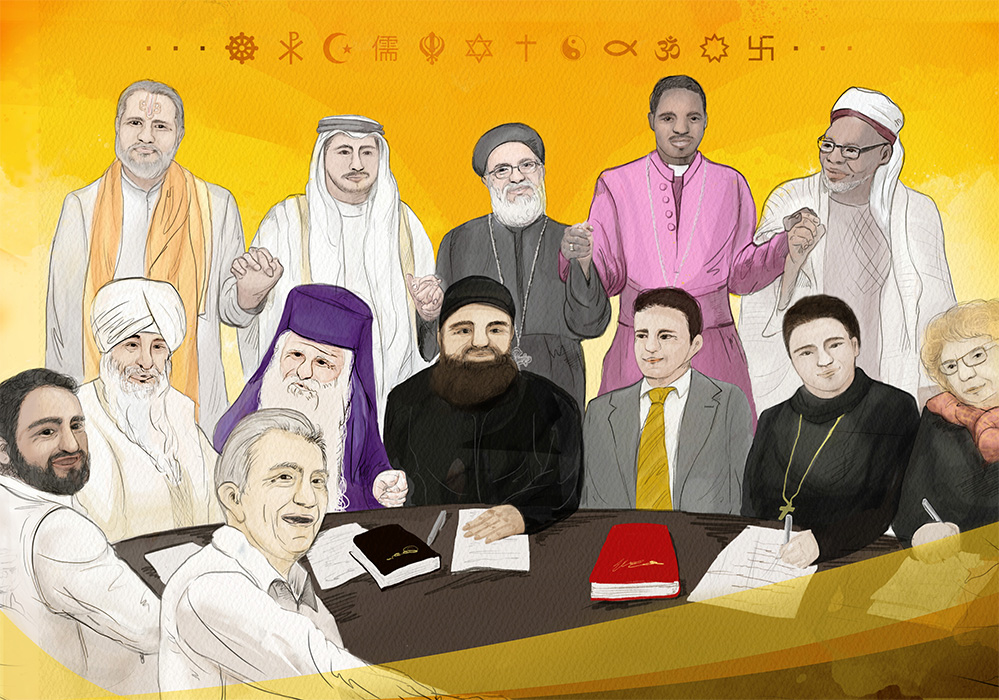
This forum was organized amidst a backdrop of growing public concern over corruption in the Philippines and declining trust in public institutions. Three religious leaders representing Catholicism, Islam, and Hinduism engaged in in-depth discussions on ethical values grounded in their respective religious scriptures. They emphasized that leadership rooted in integrity, compassion, and justice is essential to restoring public trust and strengthening the role of youth.
The young leaders who attended the forum shared that the interfaith discussions resonated with them and deepened their understanding of leadership beyond religious boundaries.
Jun Arci M. Manao, a student from Ilaya National High School, emphasized, “Faith-based communities can safeguard peace and unity.” Ruben Matthew C. Ramirez, a student from Urdaneta City University, stated that the event “awakened him once again to stay focused on the values that truly matter as a leader without wavering.” Many attendees affirmed the importance of leadership grounded on inner values and faith.
Three Key Messages That Transcend Religion
The key messages presented at the forum embody universal values that go beyond religion: integrity, cooperation, and exemplary conduct.

1. Integrity: Reclaiming Inner Values (Catholic and Islamic Perspectives)
Dr. Renato Taib Oliveros, a Catholic priest and peace advocate, drew on both Christian and Islamic scriptures to emphasize that moral principles opposing corruption lie at the core of all religions. He pointed out that today’s corruption reveals a gap between the teachings of sacred texts and real-life actions, and urged young people to rediscover deeper inner dignity and moral purpose. He stressed that true ethical leadership begins not with new regulations but with an inner transformation that returns to the core values and the teachings of scripture.
2. Cooperation: Seeking Unity in Diversity (Islamic Perspective)
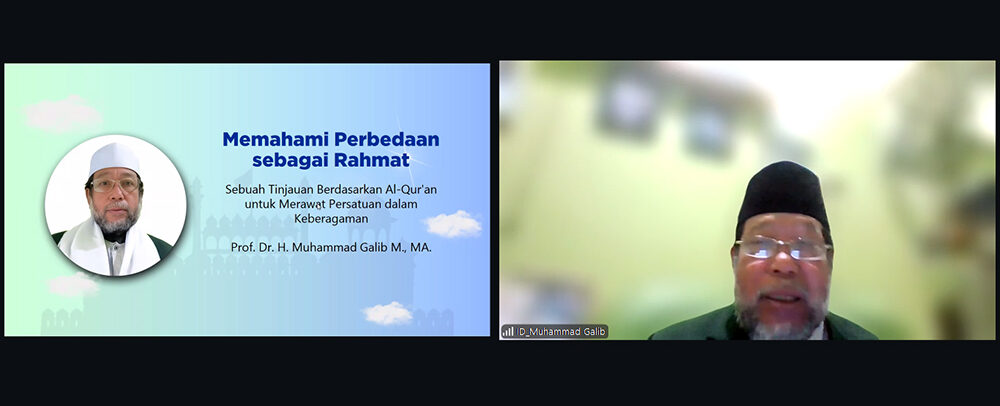
Prof. Dr. H. Muhammad Galib Mattola of Qur’anic Studies and Tafsir at Alauddin State Islamic University of Makassar in Indonesia explained that righteous leadership flourishes when the society practices compassion and mutual assistance and embraces unity despite differences. He emphasized, “For humanity to move beyond conflict, hostility, and bloodshed and engage in harmonious interaction, diversity must be approached with a spirit of compassion.” Citing a verse from the Qur’an (5:2), Prof. Galib urged all people, as one humanity, to put aside hostility and work together to build peace and become one.
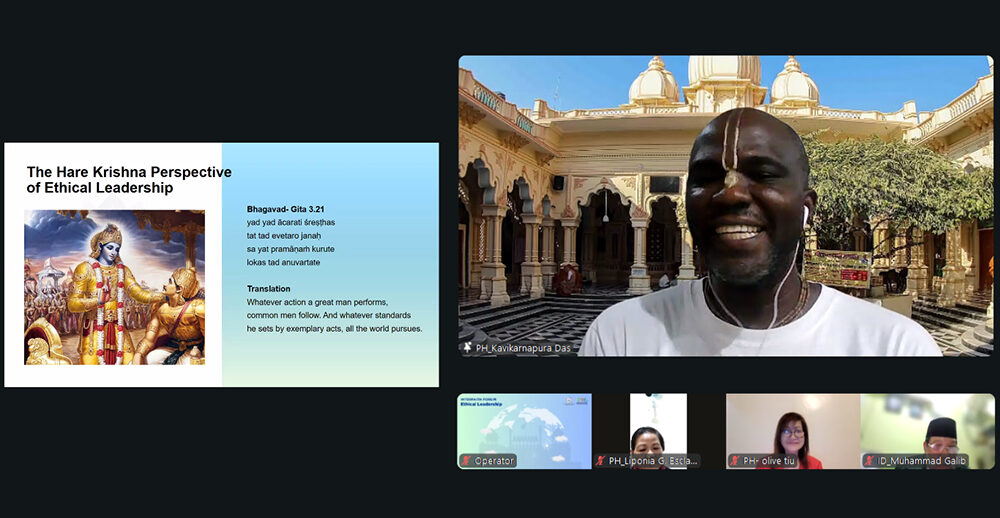
3. Exemplary Conduct: Leaders Must Lead Through Service (Hindu Perspective)
Karnapura Das, a Hindu priest and missionary of the International Society for Krishna Consciousness (ISKCON), emphasized the responsibility of leaders by citing a passage from the Bhagavad Gita (3.21). He noted, “Whatever actions great people do, common people follow.” He stressed that ethical leadership begins with aligning one’s values with one’s actions—that is, leading by example. Priest Das recommended that education systems incorporate character formation, self-discipline, and servant leadership so that future leaders may adopt integrity as their fundamental moral compass.
Fostering Leadership Through Harmony and Diversity Beyond Religion
The forum went beyond religious education alone, but also served as a platform for practical peace education that helps young people develop into upright leaders who will take responsibility for the future of their communities and nations. In this space of harmony that transcended borders and religions, participants recognized that they shared common “principles of ethical leadership” despite differences in religious teachings. This demonstrated that religious diversity can serve not as a source of social conflict, but as a foundation for nurturing young leaders who can build a more ethical and peaceful society. Such values-based education aligns closely with HWPL’s core mission to achieve the cessation of war and sustainable peace worldwide.
Concluding the event, HWPL Philippines and IPYG Indonesia pledged to continue holding these interfaith learning platforms on a regular basis to support the development of young leaders who are upright and principled in the future.